
Leather Hero Top Coat Guide: Matte, Satin, or Gloss Finish?
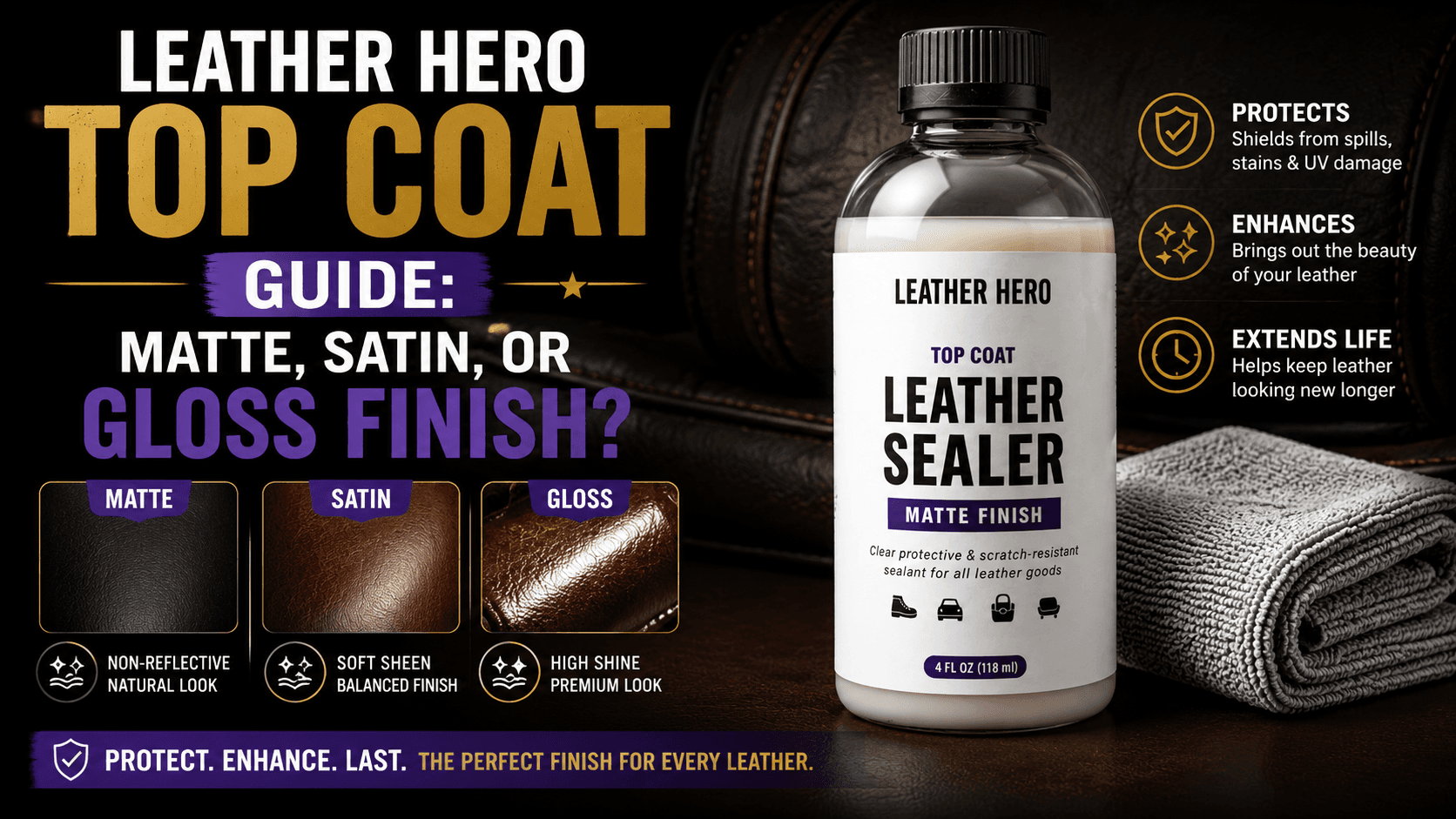
A leather top coat is the protective finish that helps restored color stand up to rubbing, handling, cleaning, and daily wear. It is especially important after color work on seats, couch arms, steering wheels, shoe toes, and handbag handles.
The finish you choose changes how the leather looks. Matte keeps shine low, satin gives a natural soft sheen, and gloss creates a brighter polished finish. This guide explains when to use each one and how to apply top coat without making leather look plastic.
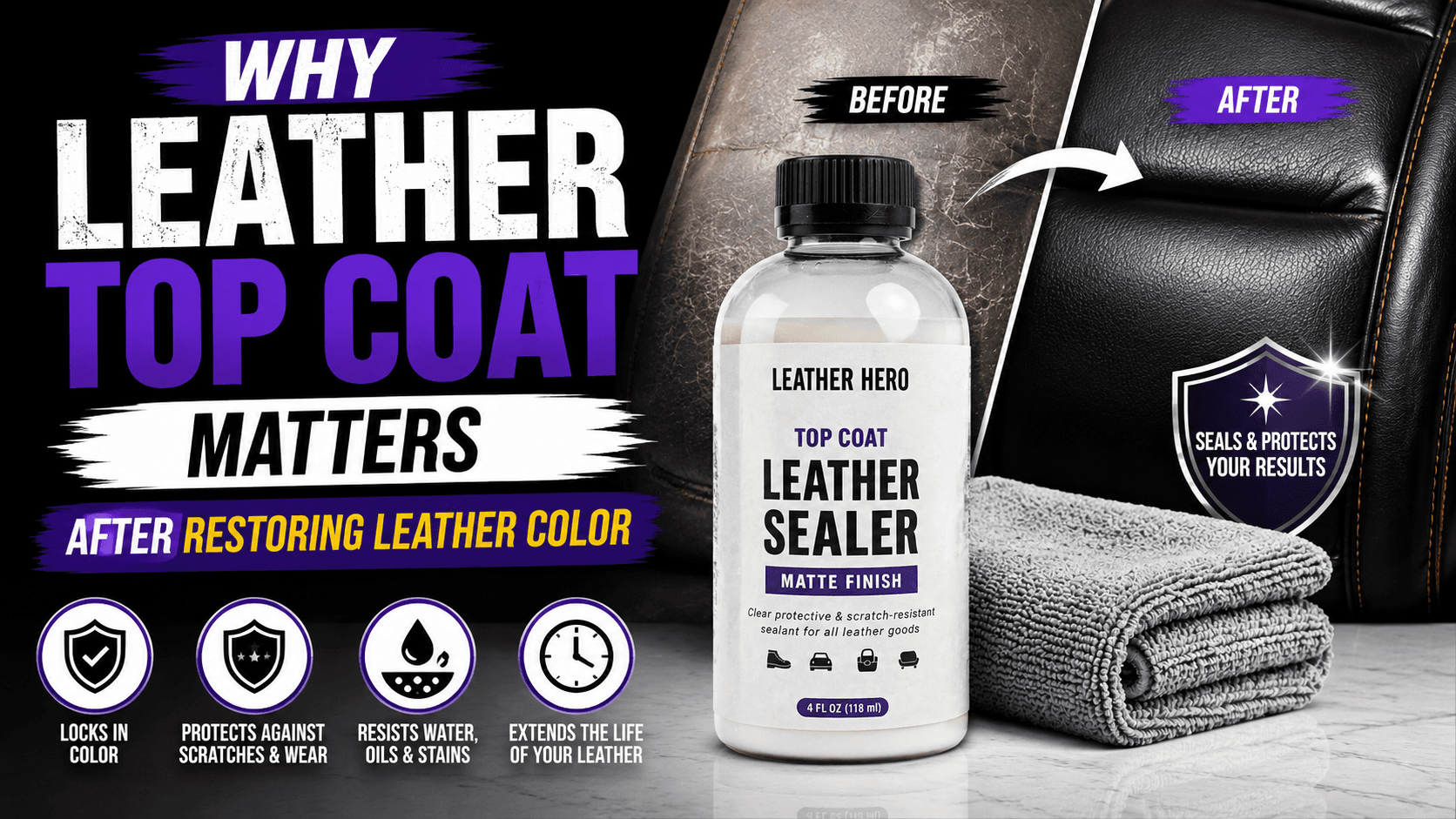
Use top coat after color restoration on high-touch leather areas to help protect against wear and color transfer.
Matte finish is best when you want a low-shine natural look.
Satin finish is the most versatile choice for many furniture, shoe, bag, and auto leather projects.
Gloss finish is best when the leather originally had a shiny polished surface or when you want a brighter final appearance.
Restoration Flow
Restore color
Let color dry
Choose finish level
Apply thin top coat
What Leather Top Coat Does
Top coat is not the same as cleaner, conditioner, or color restorer. It is a finish layer. After color has been restored, top coat helps protect the work from handling, friction, and routine cleaning. It can also adjust the final sheen so the restored area matches the rest of the item more closely.
This is why top coat matters most on working surfaces. A decorative leather panel may not need as much protection as a driver seat, steering wheel, couch arm, ottoman, handbag handle, or shoe toe. The more an area is touched or rubbed, the more useful a protective finish becomes.
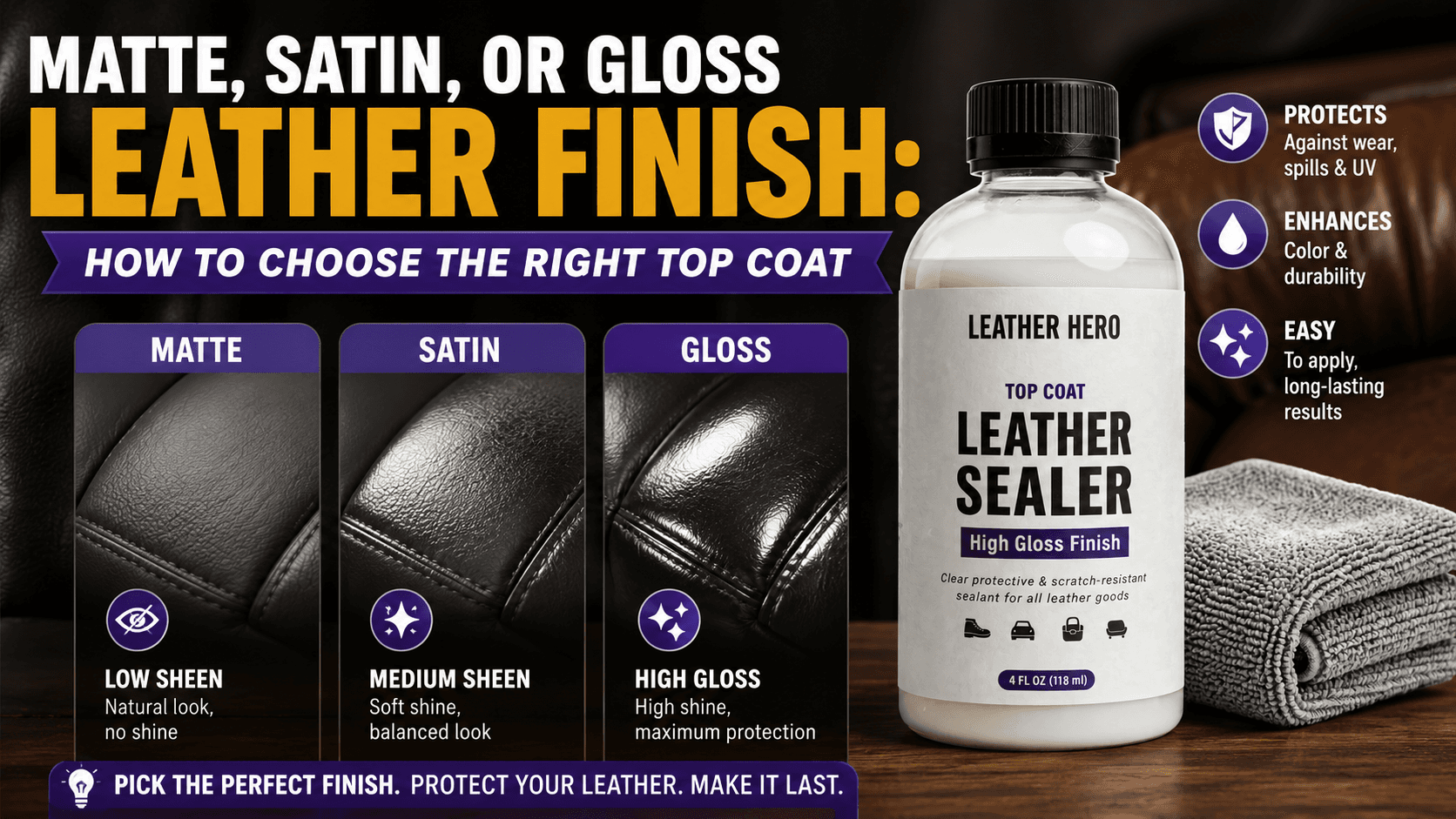
Matte vs Satin vs Gloss
Matte finish reduces shine and is useful when the leather originally had a soft, low-reflection look. It can help restored areas blend into modern furniture, car interiors, and leather pieces where a glossy surface would look artificial.
Satin finish is the middle option. It gives a gentle sheen without looking overly shiny, which makes it a practical choice for many smooth finished leather projects. If you are unsure which finish matches your item, satin is often the safest starting point after a hidden-area test.
Gloss finish is for leather that originally had a polished or brighter surface. It can be useful on certain shoes, accessories, and finish-matching projects, but it should be applied carefully because extra shine makes uneven preparation more visible.
How to Apply Top Coat
Let the color restoration dry fully before applying top coat. Wipe away dust and make sure the surface is clean. Apply top coat in thin, even layers with a suitable applicator. Avoid flooding seams, creases, or textured areas because excess finish can collect and dry unevenly.
Allow the first coat to dry, then decide if another coat is necessary. More is not always better. Thin, controlled layers usually flex better and look more professional than one heavy coat.
Common Top Coat Mistakes
The biggest mistake is choosing the wrong sheen. A glossy coat on a naturally matte sofa can make the repaired area stand out. A matte coat on a polished shoe may make the surface look dull. Test first and compare under normal room lighting.
Another mistake is applying top coat before the color work has dried. Trapped moisture or uncured color can affect the final finish. Give the restoration time to settle before sealing it.
Which Finish Should You Use by Project?
For furniture, matte or satin usually looks the most natural because sofas, chairs, and ottomans often have a softer finish. Matte is a good choice when the leather should look low-shine and understated. Satin is helpful when you want a little life in the surface without making the restored area look wet or polished. For automotive interiors, satin is often a practical middle ground because it can match many factory-style finishes while avoiding glare.
For shoes and small accessories, the choice depends on the original look. Dress shoes may need more shine, while casual boots may look better with satin or matte. Handbag handles and purse corners usually benefit from a finish that protects against handling but still looks natural. The safest method is to test the top coat on a hidden area, let it dry fully, and compare it to the surrounding leather before applying it across the main repair.
How Top Coat Fits Into a Complete Restoration Routine
Top coat is the final step, not the first step. A complete routine usually starts with cleaning, then repair if the surface is damaged, then color restoration if pigment has faded, and finally top coat after the color has dried. Skipping directly to top coat will not fix dirt, cracks, or color loss. It simply seals whatever is already on the surface, which can make problems harder to correct later.
When used in the right order, top coat makes the entire restoration feel more finished. It can even out sheen, reduce the chance of color transfer, and make future maintenance easier. For high-use leather, that final protective layer is often what separates a quick cosmetic touch-up from a longer-lasting repair.
How Long Should Top Coat Dry?
Drying time depends on product amount, room temperature, humidity, leather texture, and how much air can reach the surface. A thin coat usually dries more predictably than a heavy coat, which is another reason restraint matters. Avoid sitting on, wearing, or heavily handling the repaired item too soon. The surface may feel dry before the finish has settled enough for friction.
If you are working on a chair, car seat, steering wheel, or shoe, give the top coat enough time before returning the item to regular use. Rushing the last step can leave marks, dull patches, or areas that collect lint. A careful dry period protects all the cleaning, color, and repair work that came before it.
How to Match the Existing Sheen
The best top coat choice is the one that disappears into the original finish. Look at an unworn area of the item, such as the back of a cushion, the side of a shoe, the underside of a strap, or a protected section of a car seat. That hidden area shows the finish level more accurately than the damaged spot, which may be dull from wear or shiny from body oil.
Compare the test area after the top coat dries, not while it is wet. Wet finish almost always looks glossier than the final result. If the test looks too shiny, choose a lower-sheen finish. If it looks too flat compared with the original leather, satin or gloss may be better. Matching sheen is just as important as matching color.
Conclusion
Leather Hero top coat is the finishing step that helps protect restored leather and match the final sheen. Choose matte for low shine, satin for a natural balanced look, and gloss for polished leather.
For most projects, clean the leather, restore color in thin coats, allow it to dry, and then apply the top coat finish that best matches the original surface.
If you are unsure, start with a hidden test and compare the dry result to the least-worn part of the item. A careful test takes only a little time, but it can prevent the most common top coat problems: too much shine, uneven finish, or a repaired spot that stands out from the rest of the leather.
Match the product to the leather type, finish, and condition, then test it on a hidden area before full application.
Leather Hero Care Note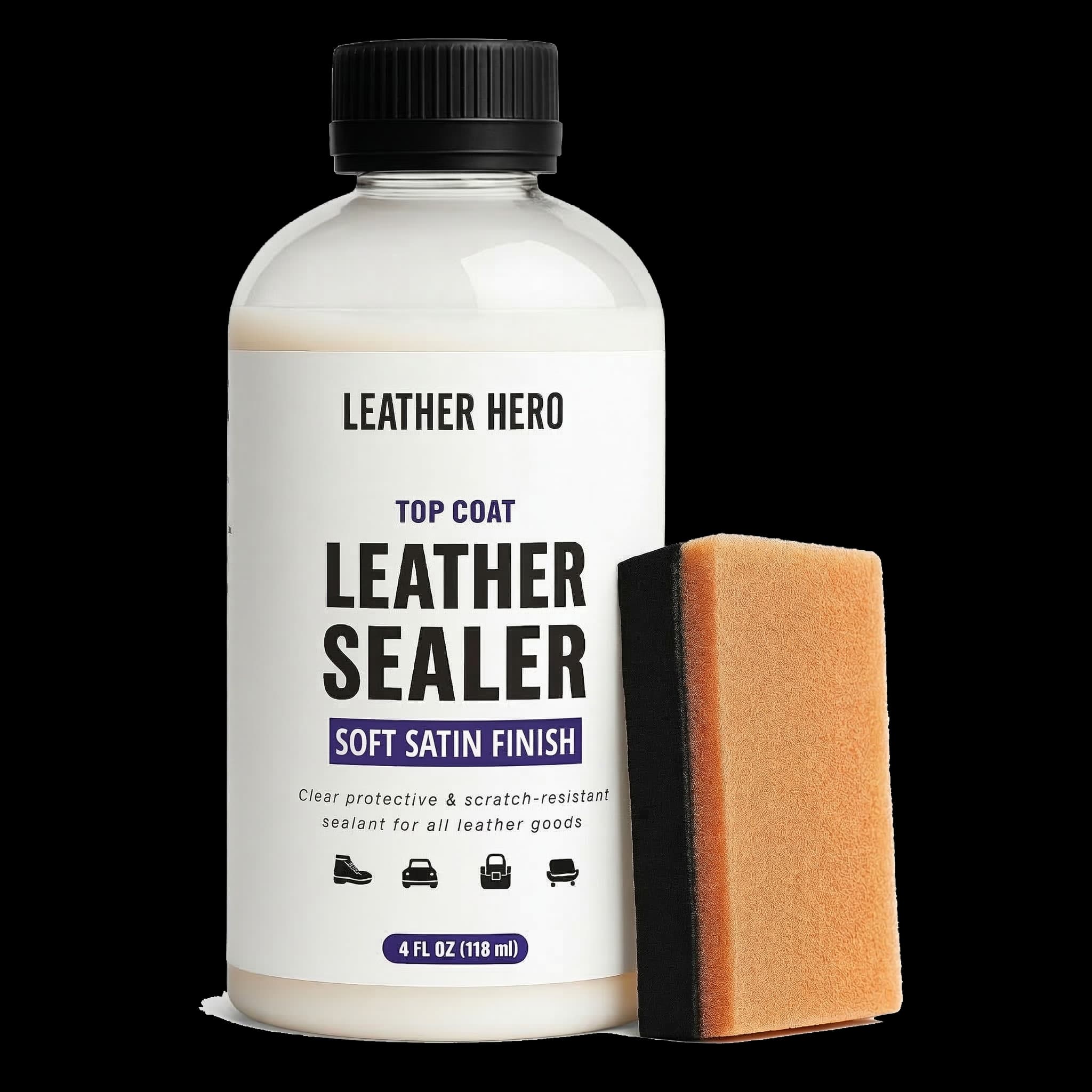
Recommended Product
Leather Hero Top Coat - Satin Finish
A focused product pick for the restoration steps in this guide.
Helpful References
Frequently Asked Questions
Do I need top coat after leather color restorer?
Top coat is recommended for high-touch or high-friction areas because it helps protect restored color from wear.
Which leather top coat finish is most natural?
Satin is often the most natural-looking middle finish, while matte is lower shine and gloss is brighter.
Can top coat stop leather color from rubbing off?
Proper preparation, dry color layers, and a compatible top coat can reduce the risk of transfer, especially on areas that are handled often.
Can I put top coat on dirty leather?
No. Clean the leather first. A top coat over dirt, oil, or residue can trap contamination and create an uneven finish.
Join The List
Leather Care, Delivered.
Get expert guides and exclusive offers in your inbox.