
Why Leather Top Coat Matters After Restoring Leather Color
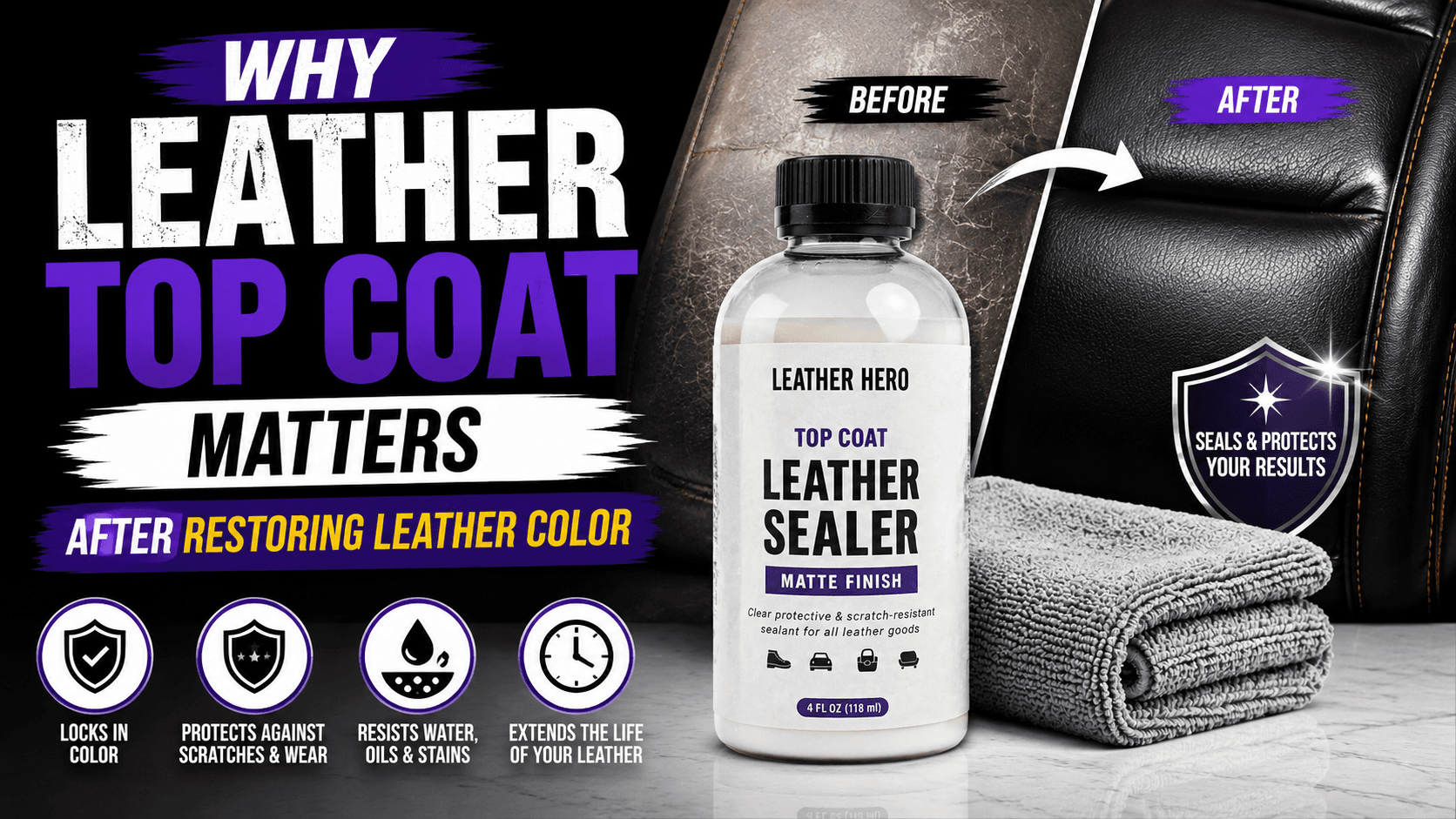
A leather color restoration project is not truly finished when the color looks good. The restored surface still has to survive hands, clothing, sunlight, cleaning, moisture, friction, and flex. That is where leather top coat matters. A top coat is the protective finishing layer that helps the color stay in place and gives the surface a more controlled sheen.
Many people skip this step because the leather looks restored after color is applied. That can work on low-touch decorative pieces, but it is risky on couch arms, car seats, steering wheels, shoe toes, handbag handles, jackets, and dining chairs. Those surfaces are touched constantly. Without a protective finish, restored color may wear faster, look uneven, or become harder to clean.
A leather top coat helps protect restored color from friction, moisture, cleaning, and daily handling.
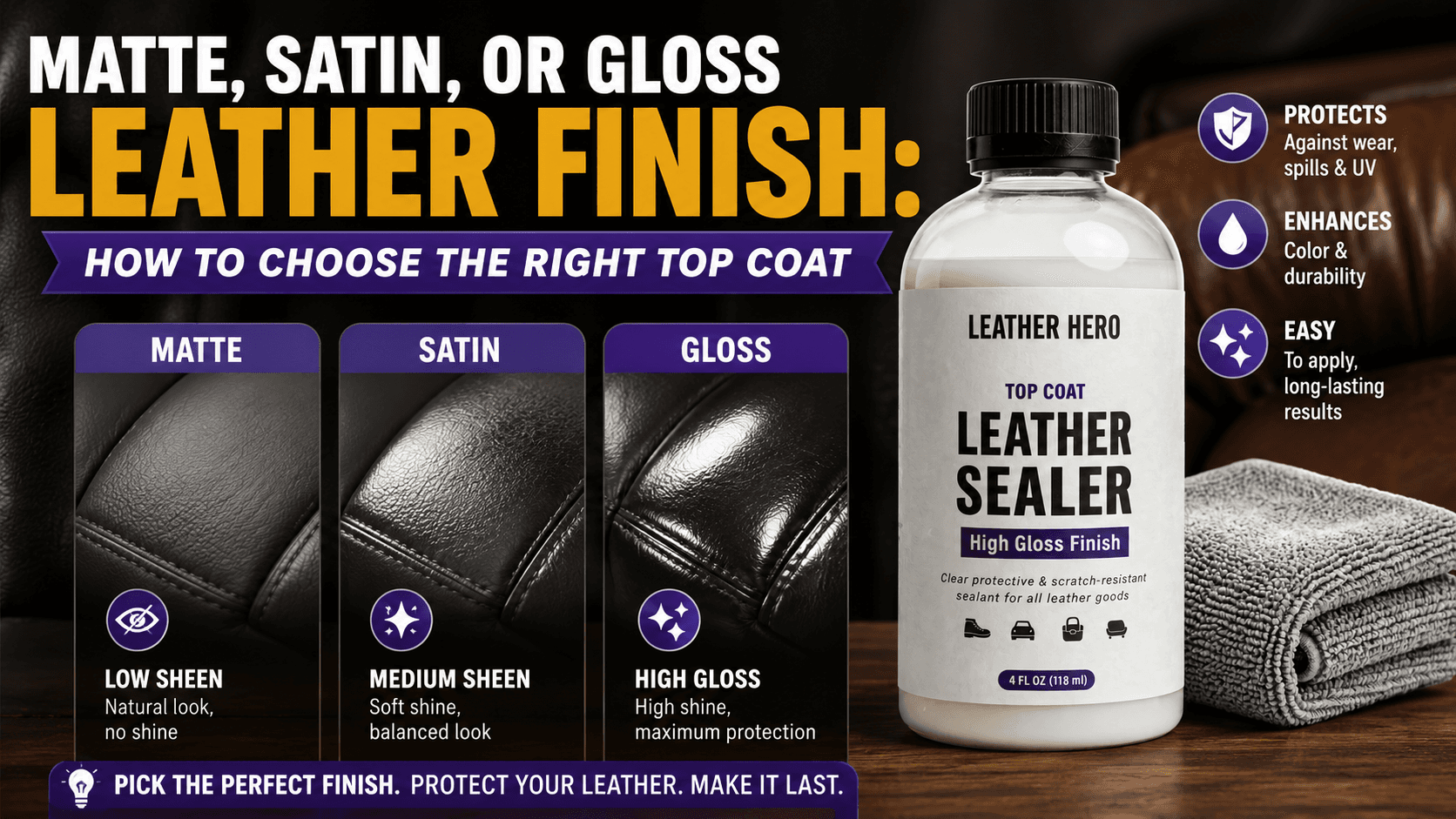
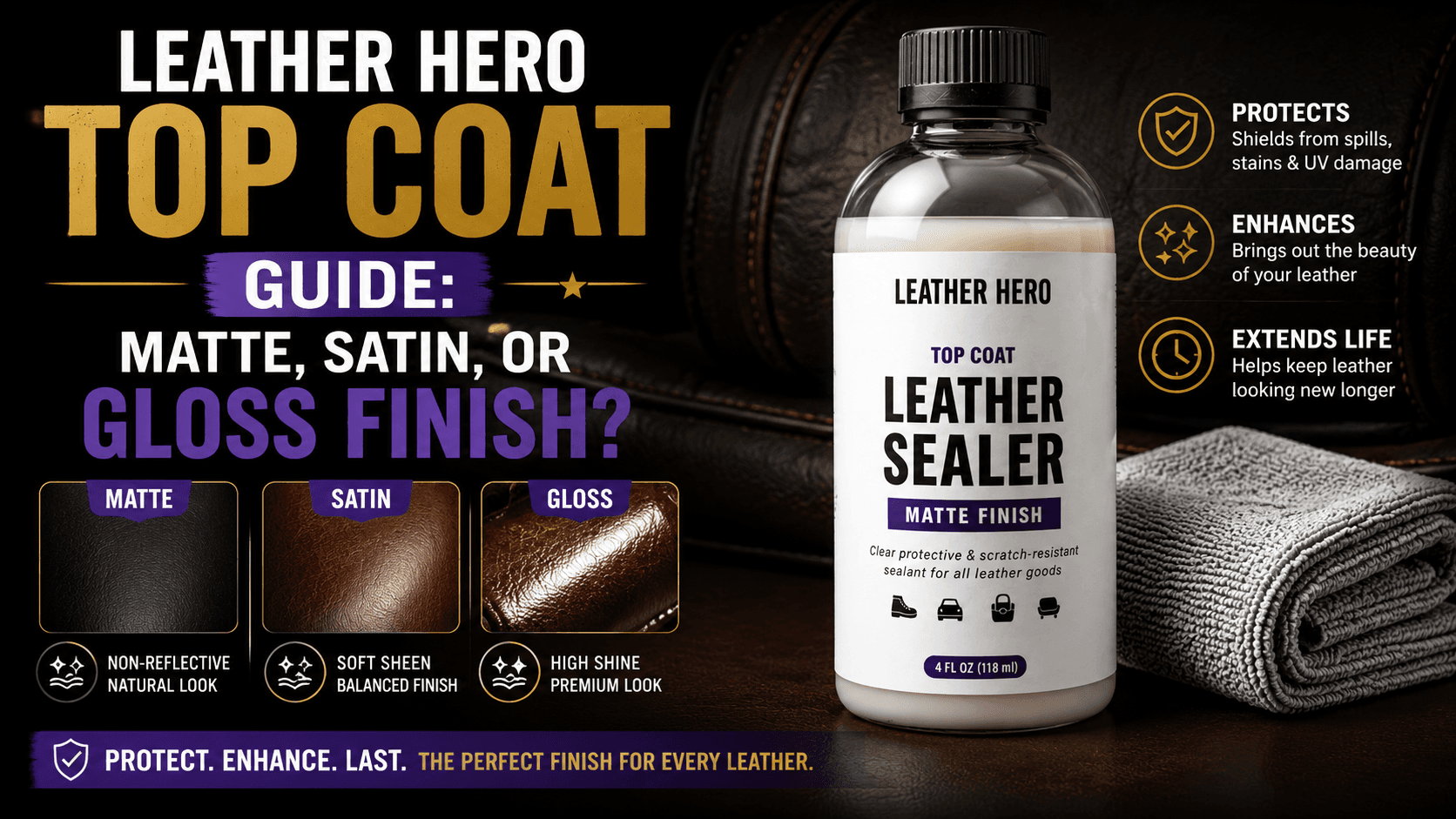
Satin finish is a practical choice when you want a natural, low-to-medium sheen that does not look overly shiny.
Gloss finish can be useful when the original leather has a shinier appearance or when the item needs a more polished look.
Top coat should be applied only after the color layer is dry and tested, using thin even coats rather than one heavy layer.
Restoration Flow
Restore color evenly
Let color dry fully
Apply thin top coat
Cure before heavy use
What Leather Top Coat Does
A leather top coat is a clear or lightly finishing layer used after color work. Its job is to protect the restored surface and help control the final appearance. It can reduce color transfer, add abrasion resistance, and make the surface easier to wipe clean. It also helps unify the sheen so a repaired area does not stand out as dull, patchy, or unusually shiny compared with the rest of the item.
Top coat is especially important because leather restoration changes the surface. When you clean, repair, and recolor leather, you are interacting with the original finish. Even when the color looks perfect, the restored area may be more vulnerable until it is protected. A top coat is like the finishing stage of the restoration system: it does not replace good preparation, but it helps preserve the work you already did.
This is why professional-looking projects often include a top coat on high-use items. A restored display piece may not need much protection. A restored steering wheel, sofa cushion, shoe toe, purse handle, or car seat absolutely benefits from a protective finish.
When You Should Use a Top Coat
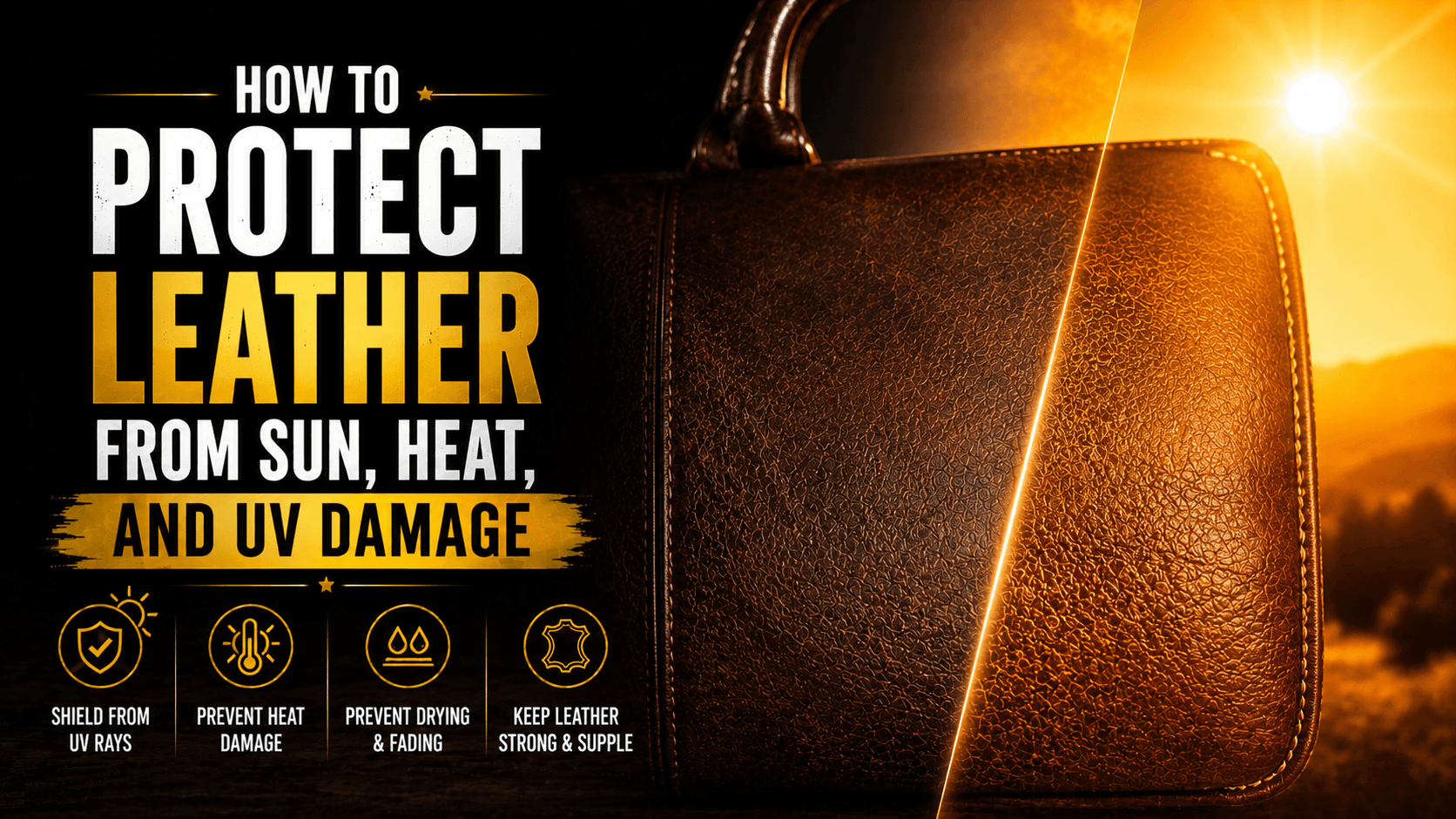
Use a top coat whenever the restored leather will be touched, flexed, rubbed, or cleaned regularly. Furniture arms and seat cushions are prime examples because clothing and skin oils create constant friction. Car interiors need protection because drivers slide in and out, sunlight heats the surface, and hands touch steering wheels and armrests repeatedly. Shoes need protection because toes scuff, bend, and meet moisture. Handbag handles need it because hands transfer oil and lotion.
You should also use top coat when the repaired area has a different sheen from the surrounding leather. Color restoration can make a faded patch look better but still leave it visually separate because the light reflects differently. A top coat helps bring the restored and original areas closer together. It is not magic, but it gives you another level of control.
You may skip top coat on a very low-use item if the color product does not require it and the surface already looks even. However, if the item matters to you or gets regular use, skipping protection to save time is usually not worth it.
Satin vs Gloss Finish
Satin finish is the safest choice for many restoration projects because it looks natural on finished leather. It gives the surface a clean, cared-for appearance without making it look wet or plastic. Leather Hero Top Coat - Satin Finish is a good match for furniture, car interiors, bags, and shoes where the owner wants a refined sheen that does not call attention to the repair.
Gloss finish is useful when the original leather has a shinier coating or when the item is meant to look polished. Some dress shoes, patent-like accessories, and glossy furniture finishes may need more shine than satin can provide. A gloss top coat can make color look richer, but it can also make uneven texture more visible. That means surface prep matters even more.
If you are unsure, compare the restored area to an unworn part of the item. Look at the leather from the side under natural light. If the original finish is soft and muted, satin will usually blend better. If the original finish reflects light strongly, gloss may be closer. Always test first.
How to Apply Top Coat Correctly
Let the color layer dry fully before applying top coat. If color is still damp, the top coat can drag pigment, create streaks, or trap moisture. Once dry, wipe the surface with a clean soft cloth to remove dust. Apply a thin even coat with the recommended applicator. Work in small sections and keep the application smooth. Avoid puddles, heavy edges, and repeated rubbing over the same half-dry area.
Allow the first coat to dry, then inspect the sheen. If another coat is needed, apply it lightly. Multiple thin coats are better than one heavy coat because they flex better and look more even. After the final coat, allow the item to cure before heavy use. This is particularly important for seats, steering wheels, shoes, and handles because early friction can mark a finish that has not fully set.
Do not use household clear coats, floor finishes, or craft varnishes on leather. They may dry too hard, crack when flexed, smell strongly, or create a surface that cannot be comfortably used. Use a finish designed for leather.
How Top Coat Helps SEO Buyers Make Better Decisions
From a buying perspective, top coat is the product that answers a question many customers do not know to ask: how do I make the restoration last? People search for leather color restorer because the visible problem is fading. But after they apply color, the real concern becomes durability. A top coat bridges that gap. It tells the customer that restoration is a system, not a single bottle.
This is also why product education matters. When a buyer understands the role of cleaner, restorer, repair compound, and top coat, they are more likely to choose the correct combination and get a better result. Better results build trust, reduce confusion, and support the authority of the brand in Google search.
Conclusion
Leather top coat matters because color restoration needs protection. It helps restored leather resist friction, improves cleanability, controls sheen, and makes the finished project look more complete. Satin finish is usually the best natural-looking option, while gloss finish fits shinier leather or projects that need a polished look.
If you have already cleaned, repaired, and recolored leather, do not rush the final step. Let the color dry, test the finish, apply thin coats, and let the item cure. That extra patience can be the difference between a restoration that looks good for a weekend and one that stays presentable through real use.
Match the product to the leather type, finish, and condition, then test it on a hidden area before full application.
Leather Hero Care Note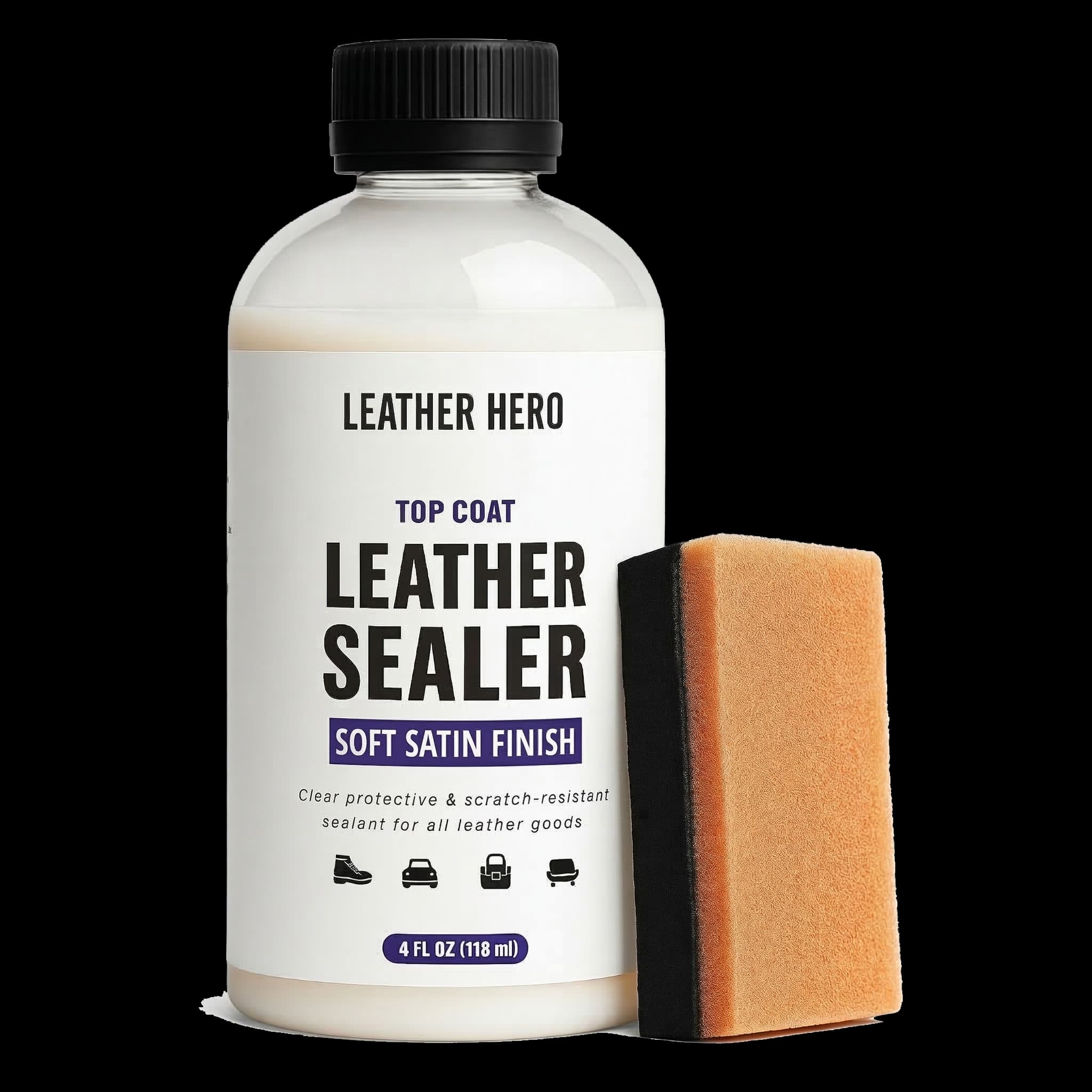
Recommended Product
Leather Hero Top Coat - Satin Finish
A focused product pick for the restoration steps in this guide.
Helpful References
Frequently Asked Questions
Is leather top coat necessary after color restoration?
It is strongly recommended for high-use items such as seats, couch arms, steering wheels, shoes, and handbag handles because it helps protect restored color.
Should I choose satin or gloss top coat?
Choose satin for a natural low-to-medium sheen and gloss when the original leather has a shinier finish or the item needs a polished look.
How many coats of leather top coat do I need?
One or two thin coats are usually better than one heavy coat. Let each coat dry as directed before applying another.
Can top coat stop leather from cracking?
Top coat protects the finish, but it does not replace conditioning or repair. Dry or cracked leather should be cleaned, repaired if needed, recolored, and then protected.
Join The List
Leather Care, Delivered.
Get expert guides and exclusive offers in your inbox.