
How to Protect Leather From Sun, Heat, and UV Damage
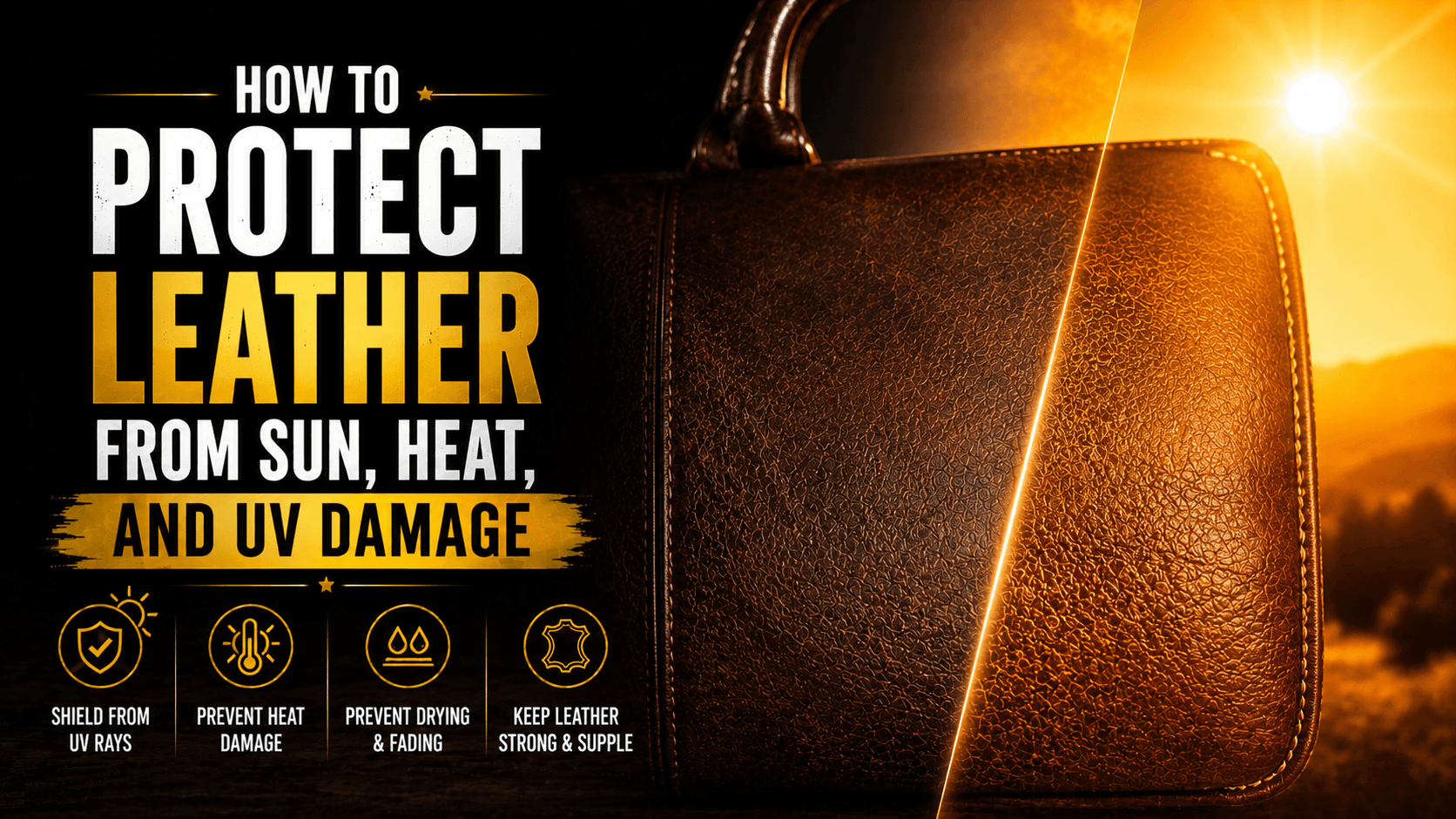
Summer is hard on leather. A couch positioned near a bright window, a car interior parked outside all day, or a bag left on a sunny patio table can dry out, fade, and stiffen faster than leather that stays out of direct light and heat. The damage builds slowly, so many people do not notice until one section looks noticeably lighter, feels drier, or starts to crack at the edges.
This guide explains what sunlight and heat actually do to leather, how to protect furniture, car interiors, bags, and shoes before damage sets in, and what to do about leather that has already started to fade or dry out from summer exposure.
UV light breaks down leather's natural oils and pigment, which is why sun-facing sections fade and dry out first.
Heat speeds up moisture loss, making leather stiff and more prone to cracking, especially in parked cars.
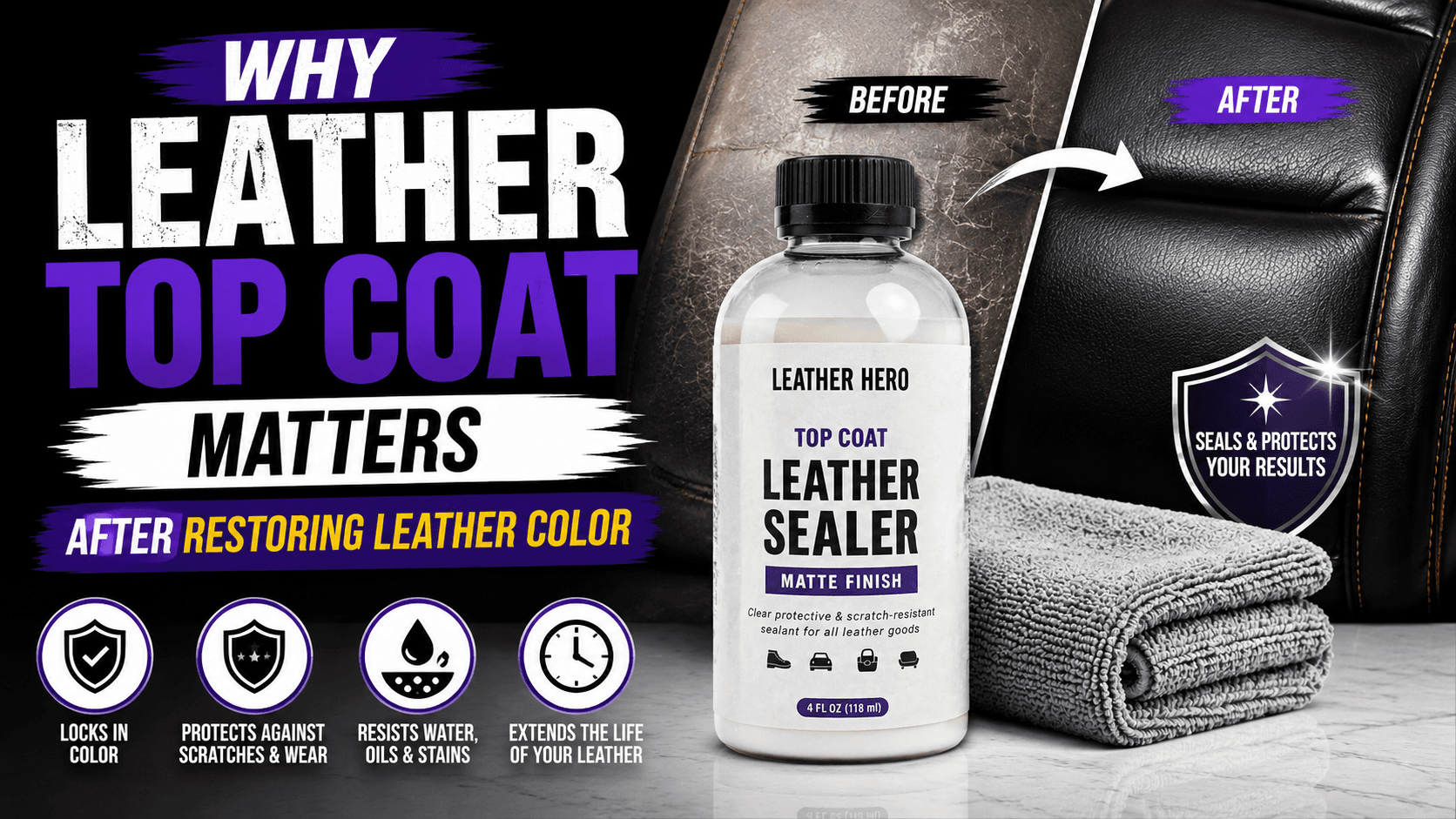
A finish coat or top coat adds a protective barrier on high-exposure surfaces such as car seats and window-facing furniture.
Repositioning, shading, or rotating leather items reduces uneven fading better than any product used alone.
Restoration Flow
Identify high-exposure areas
Clean and condition
Apply a protective finish
Reduce direct exposure
Visual Guide
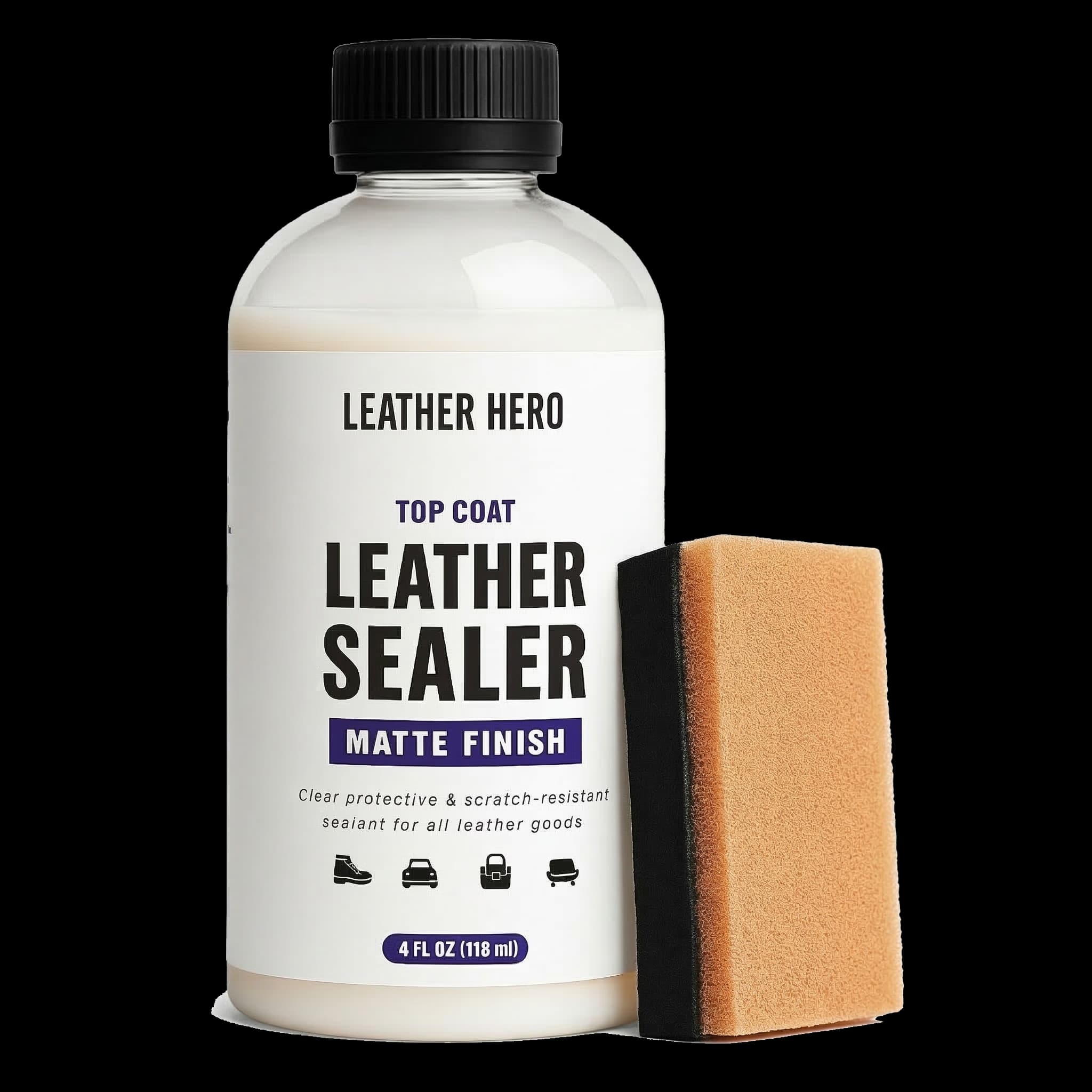
Matte Finish for Everyday Protection
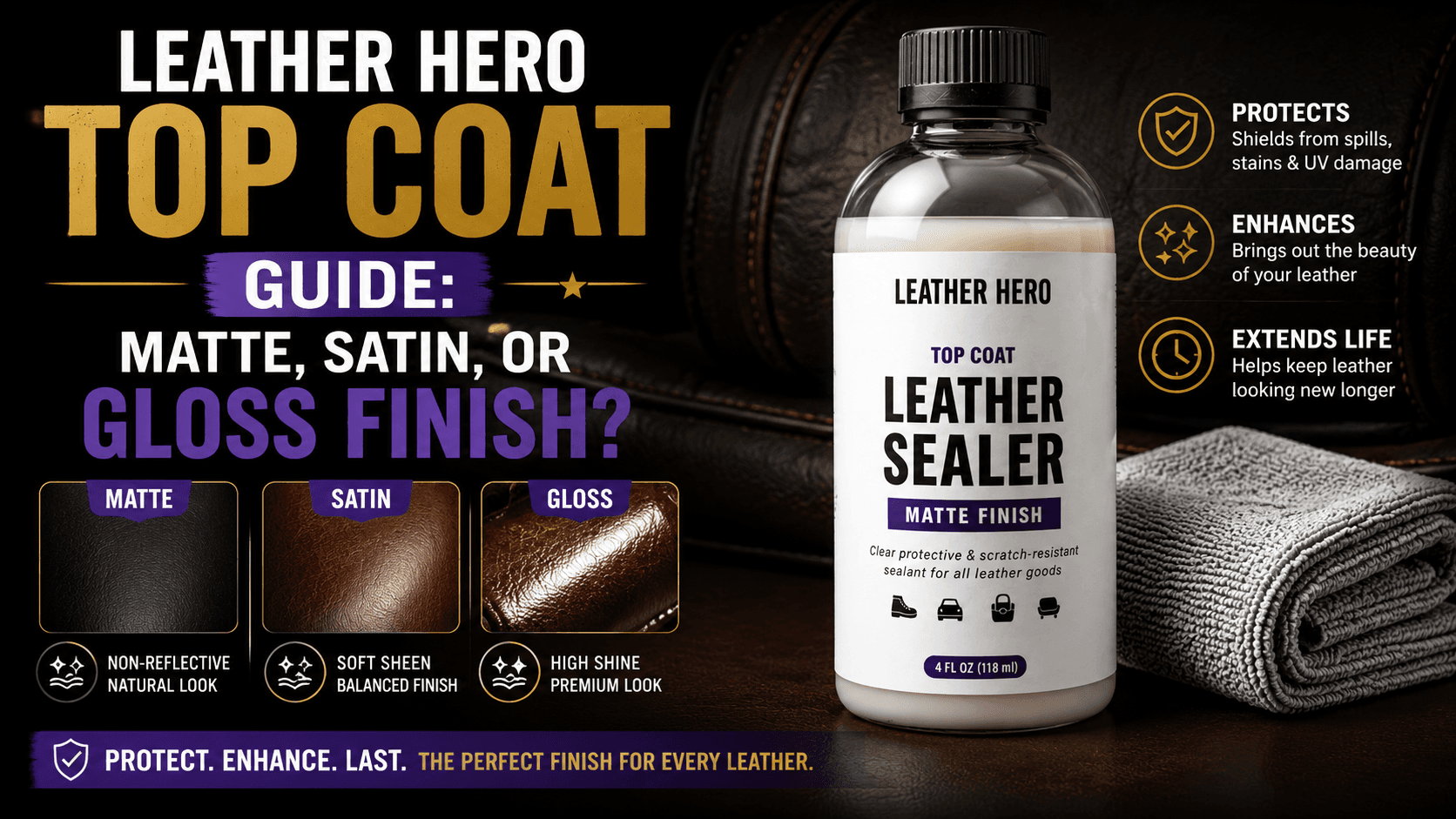
A matte top coat adds a protective barrier without changing the natural look of the leather.
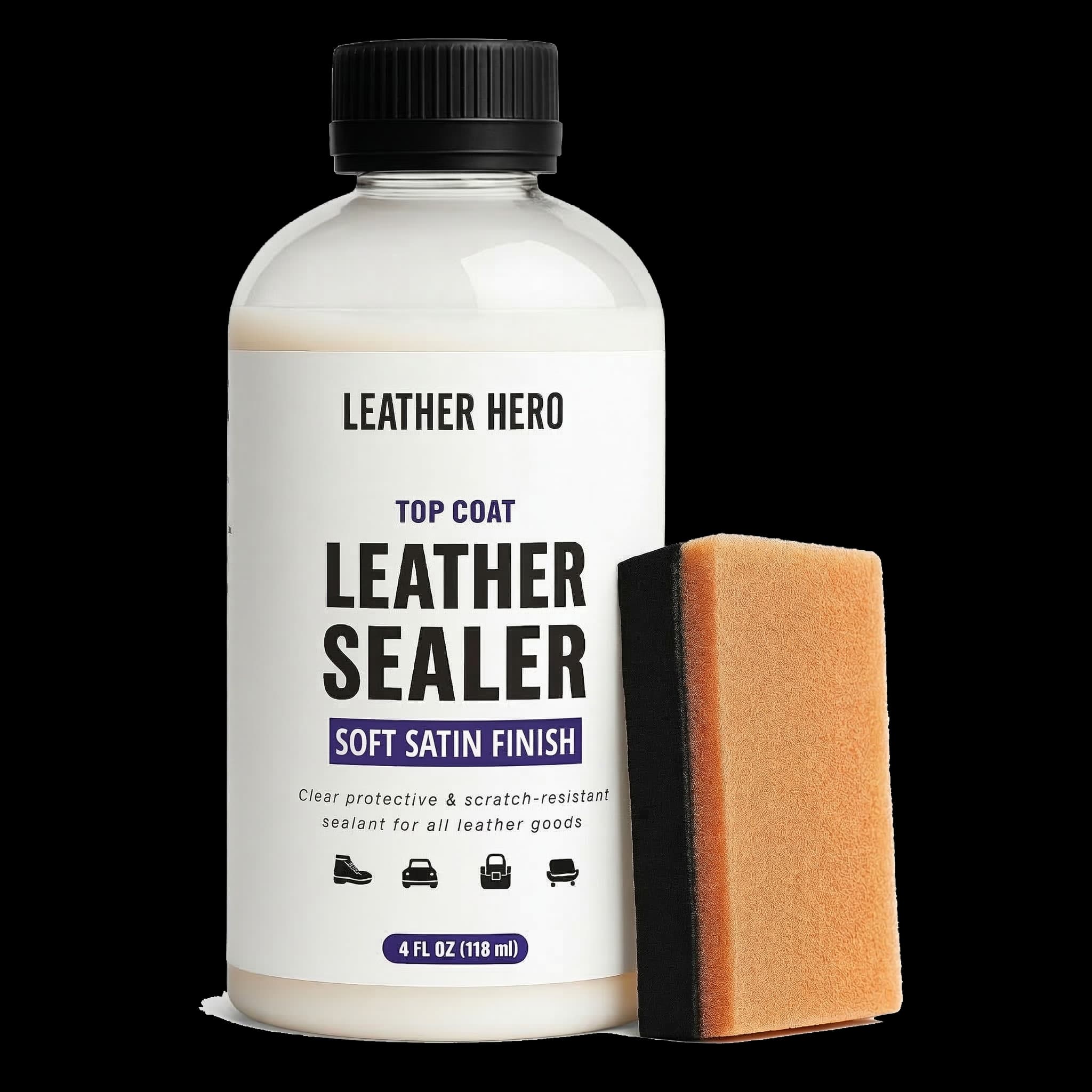
Satin Finish for Furniture and Bags
Satin finish is a common middle-ground choice for furniture, bags, and car interiors exposed to daily light.
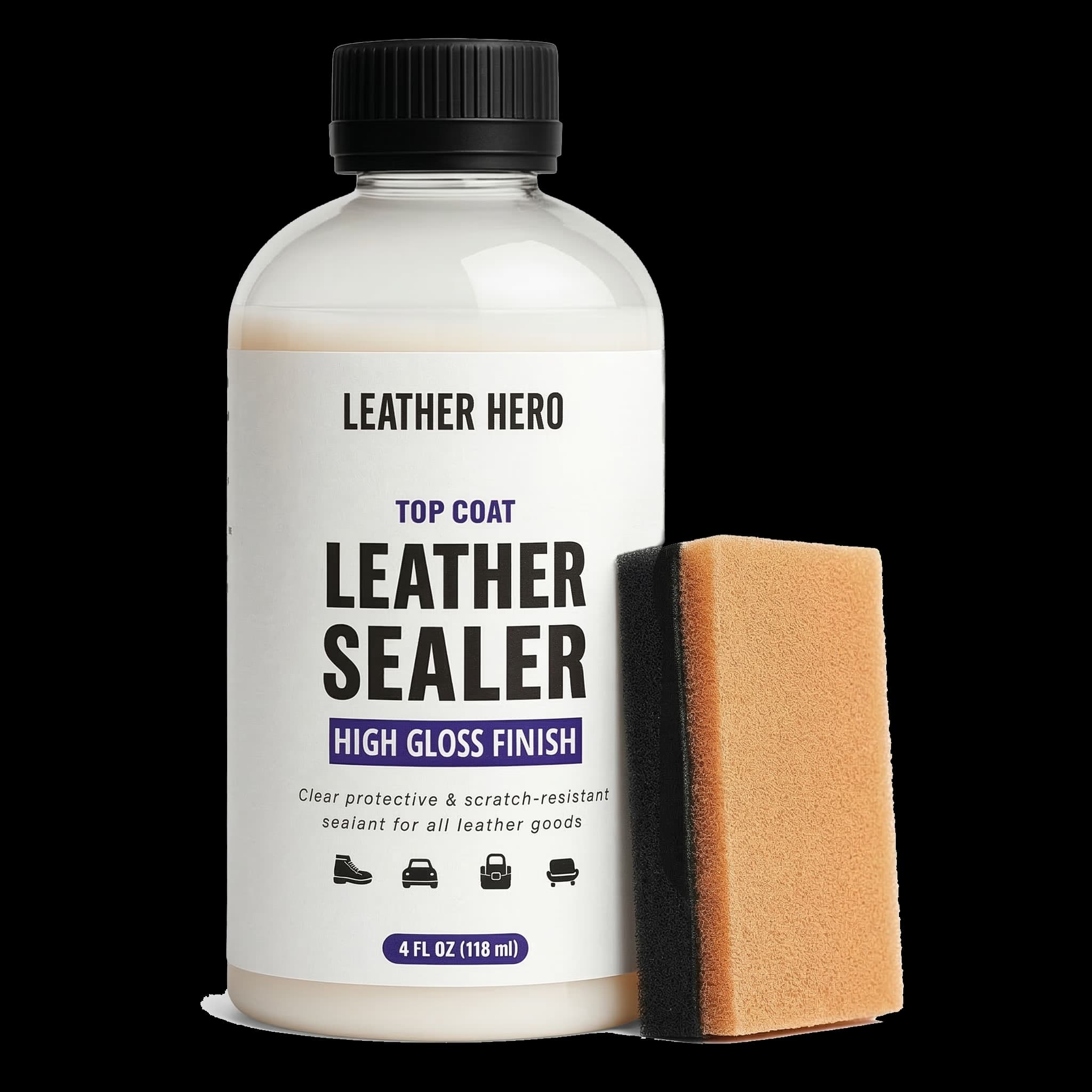
Gloss Finish for Extra Sheen
Gloss finish deepens color and adds a strong protective layer on items like shoes and accessories.
Restore Color Once It Fades
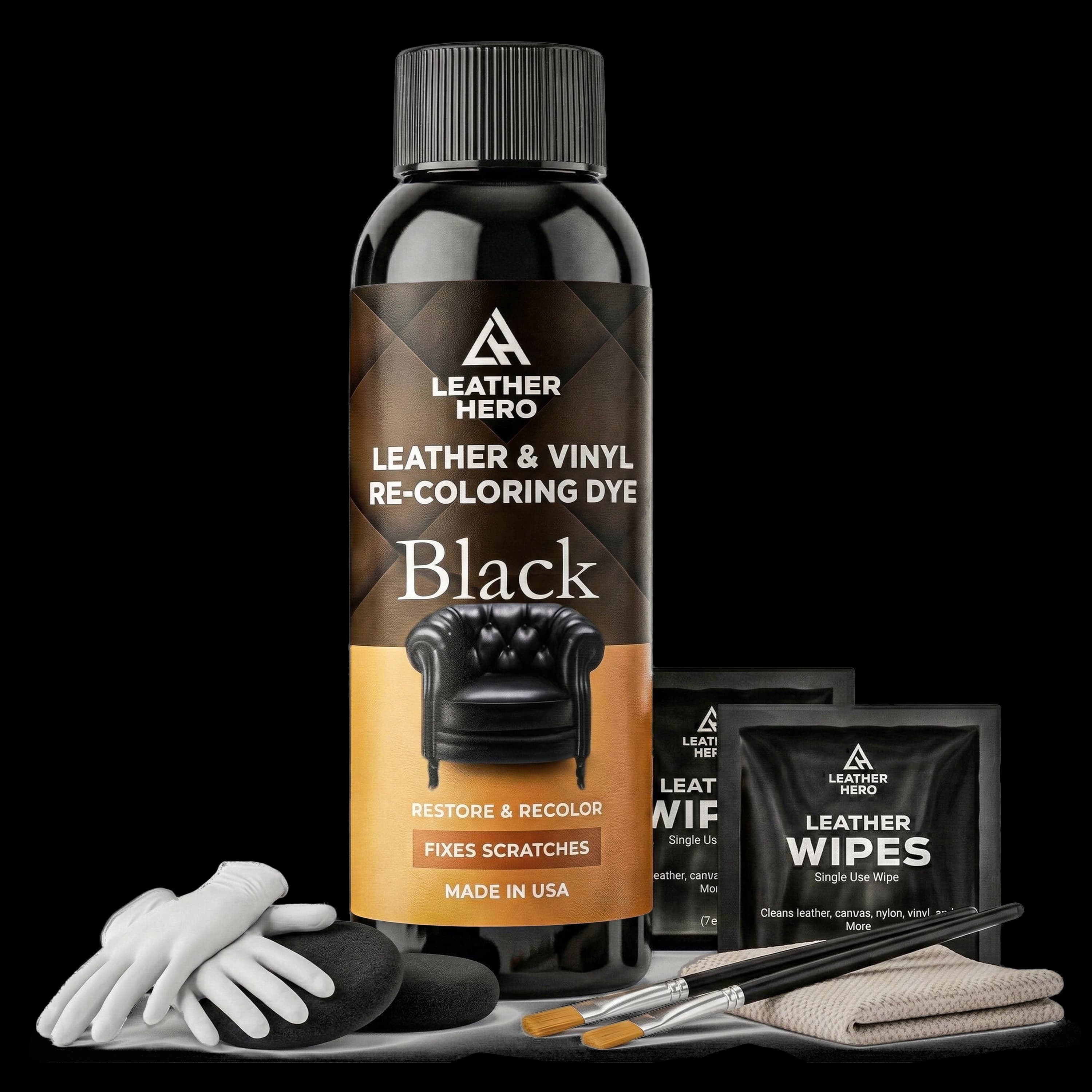
If sun damage has already faded the color, restorer can rebuild pigment before you add a protective top coat.
What Sunlight and Heat Actually Do to Leather
Leather gets its color, flexibility, and finish from a combination of dyes, pigments, and natural or synthetic oils. Ultraviolet light breaks down these components at the molecular level, which is why sun-facing panels fade faster than shaded ones and why the fading is often uneven rather than a uniform lightening across the whole item. Heat compounds the problem by accelerating moisture loss, pulling oils out of the leather faster than normal.
The combined effect shows up as fading, a chalky or dull surface, stiffness, and eventually surface cracking in the most exposed spots. This is why a car dashboard and driver's seat bolster often look worse than the rest of the interior, and why a couch arm near a bright window fades faster than the cushion base tucked in shadow.
Where Sun and Heat Damage Show Up First
Furniture positioned near south or west-facing windows takes the most direct afternoon sun, so arms, headrests, and the tops of cushions fade first. Car interiors are especially vulnerable because a parked car can reach temperatures well above the outside air, baking the dashboard, steering wheel, and top of the seats for hours at a time. Bags and shoes left on a patio table, car dash, or windowsill can fade or dry out in a single strong exposure.
Jackets and accessories are less commonly affected since they are usually worn or stored indoors, but a jacket left over a chair near a window for weeks, or packed in a hot car trunk, can develop the same fading and stiffness as furniture or car interiors.
Step One: Clean and Condition Before Summer
Leather that is already clean and properly conditioned handles heat and sun exposure better than leather with built-up dirt, oil, or old product residue. Grime can trap heat against the surface and interfere with how evenly a protective finish applies later. Start any seasonal protection routine with a proper clean, letting the leather dry fully before the next step.
If the leather already feels dry or stiff before summer even starts, address that first with an appropriate leather care routine. Leather that begins the season dehydrated will show heat and sun damage faster than leather that starts in good condition.
Step Two: Apply a Protective Finish on High-Exposure Areas
A top coat or sealer adds a barrier layer over the leather's natural finish, which can help slow moisture loss and reduce how quickly color fades from light exposure. This is most worth doing on the surfaces that get the most sun: car dashboards and seat bolsters, furniture arms and headrests facing a window, and any bag or accessory that regularly sits in direct light.
Choose a finish based on the item. Matte keeps a natural, low-shine look and works well for furniture and car interiors. Satin is a common middle ground for bags and everyday items. Gloss adds the most noticeable sheen and extra protective layer, which suits shoes and accessories where a deeper shine is welcome. Always test the finish in a hidden area first.
Step Three: Reduce Direct Exposure Where You Can
Product protection helps, but positioning matters just as much. Angling furniture away from the most direct window light, using blinds or UV window film during peak sun hours, and rotating cushions periodically can spread wear more evenly instead of concentrating it on one panel. For cars, a windshield sunshade and parking in shade when possible can meaningfully lower interior temperature and reduce cumulative UV exposure on the dashboard and seats.
For bags, shoes, and accessories, simply avoid leaving them in direct sun for extended periods, whether that is a patio table, a car dash, or a sunny windowsill. A few minutes here and there is not a major concern, but repeated hours-long exposure is where most visible summer fading comes from.
What to Do If Leather Has Already Faded From Sun or Heat
If fading has already set in, the repair path is the same as any other faded leather: clean the area, test a color restorer in a hidden spot, apply thin coats to rebuild pigment, and protect the repaired area with a finish once the color looks even. Sun-faded leather usually responds well to this process as long as the surface is not cracked or brittle.
If the leather feels stiff, brittle, or has started to crack at the surface, address the texture and hydration before color. Conditioning first, then filling any cracks, gives color restorer a stable surface to bond to instead of trying to cover damage that is still structurally compromised.
Conclusion
Sun and heat damage builds up slowly, which is exactly why it is easy to ignore until a couch arm, car seat, or bag panel looks noticeably faded and dry. A simple seasonal routine, cleaning, conditioning, protecting the highest-exposure areas, and reducing direct sun where practical, prevents most of the damage before it starts.
If fading has already happened, it is rarely permanent. A careful color restoration and a protective finish coat can bring faded leather back, and the same protective habits will help the repair last through the next season of sun and heat.
Match the product to the leather type, finish, and condition, then test it on a hidden area before full application.
Leather Hero Care NoteRecommended Product
Soft Satin Finish
A focused product pick for the restoration steps in this guide.
Helpful References
Leather Naturally Care Guide
Independent guide on protecting leather from environmental exposure and general care basics.
Leather Hero Top Coat Guide
Compare matte, satin, and gloss top coats before choosing a finish for sun-exposed leather.
Matte, Satin, or Gloss Leather Finish
A closer look at how each finish type performs under daily wear and light exposure.
Shop Leather Finishes & Color Restorers
Browse Leather Hero top coats and color restorers for sun and heat protection.
Frequently Asked Questions
Does sunlight really fade leather that quickly?
Yes, especially through south or west-facing windows or in a parked car. UV light breaks down leather's dyes and pigments, and fading often shows up first on the most exposed panel.
Can a top coat really protect leather from sun damage?
A top coat adds a protective barrier that can help slow moisture loss and reduce how quickly color fades, though it does not eliminate UV exposure entirely. Positioning and shade still matter.
Is car interior leather more at risk than furniture?
Usually yes, because a parked car can reach much higher temperatures than a room, which speeds up moisture loss and fading on dashboards and seat bolsters.
Can sun-faded leather be restored?
In most cases, yes. Clean the area, test a color restorer in a hidden spot, apply thin coats, and protect the repaired area with a finish once the color looks even.
What finish is best for protecting leather from sun exposure?
Matte works well for a natural look on furniture and car interiors, satin is a common middle ground, and gloss adds the most noticeable protective sheen for shoes and accessories.
Related Posts
View All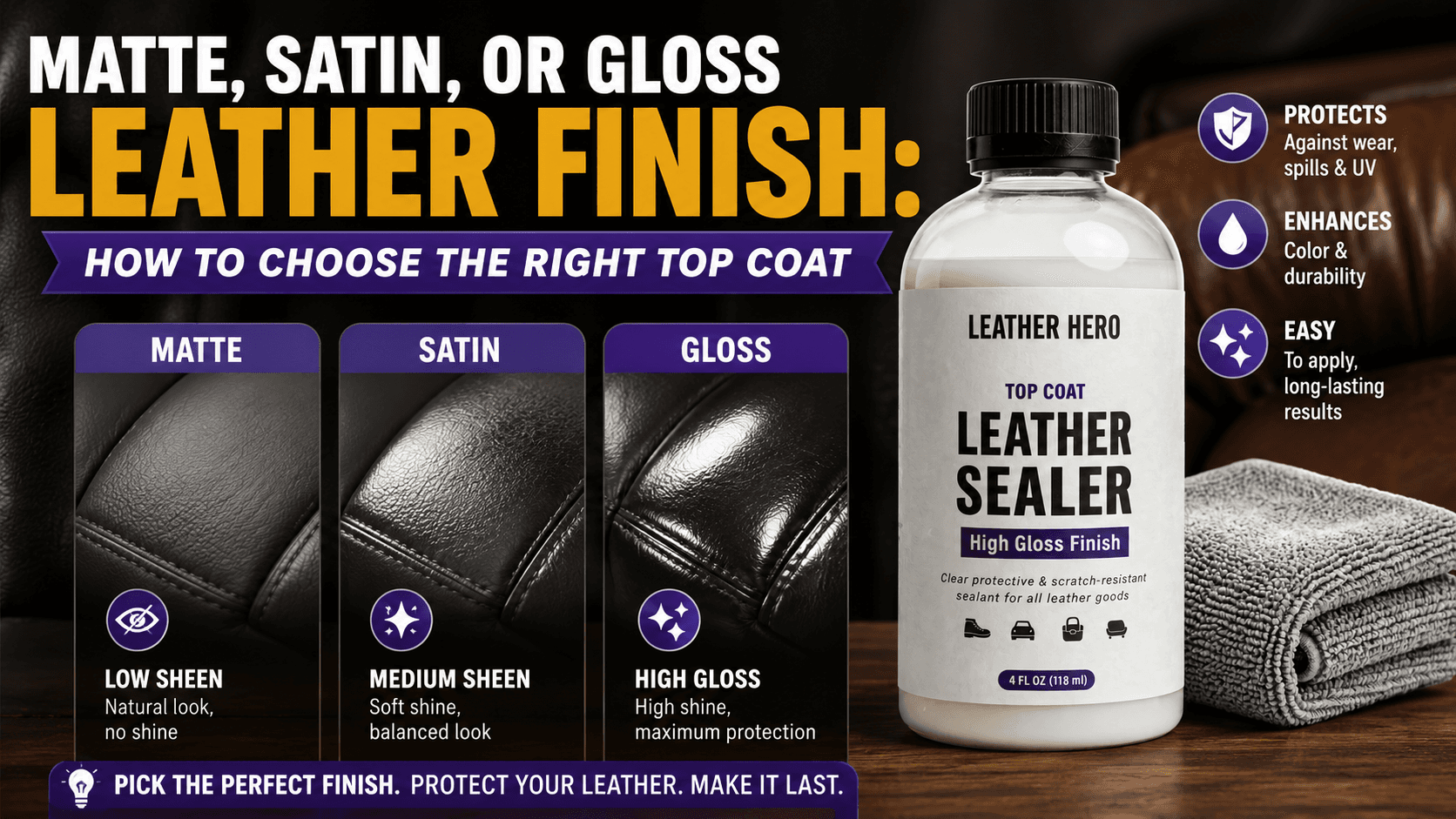
Join The List
Leather Care, Delivered.
Get expert guides and exclusive offers in your inbox.