
How to Clean, Condition, and Store a Leather Jacket the Right Way
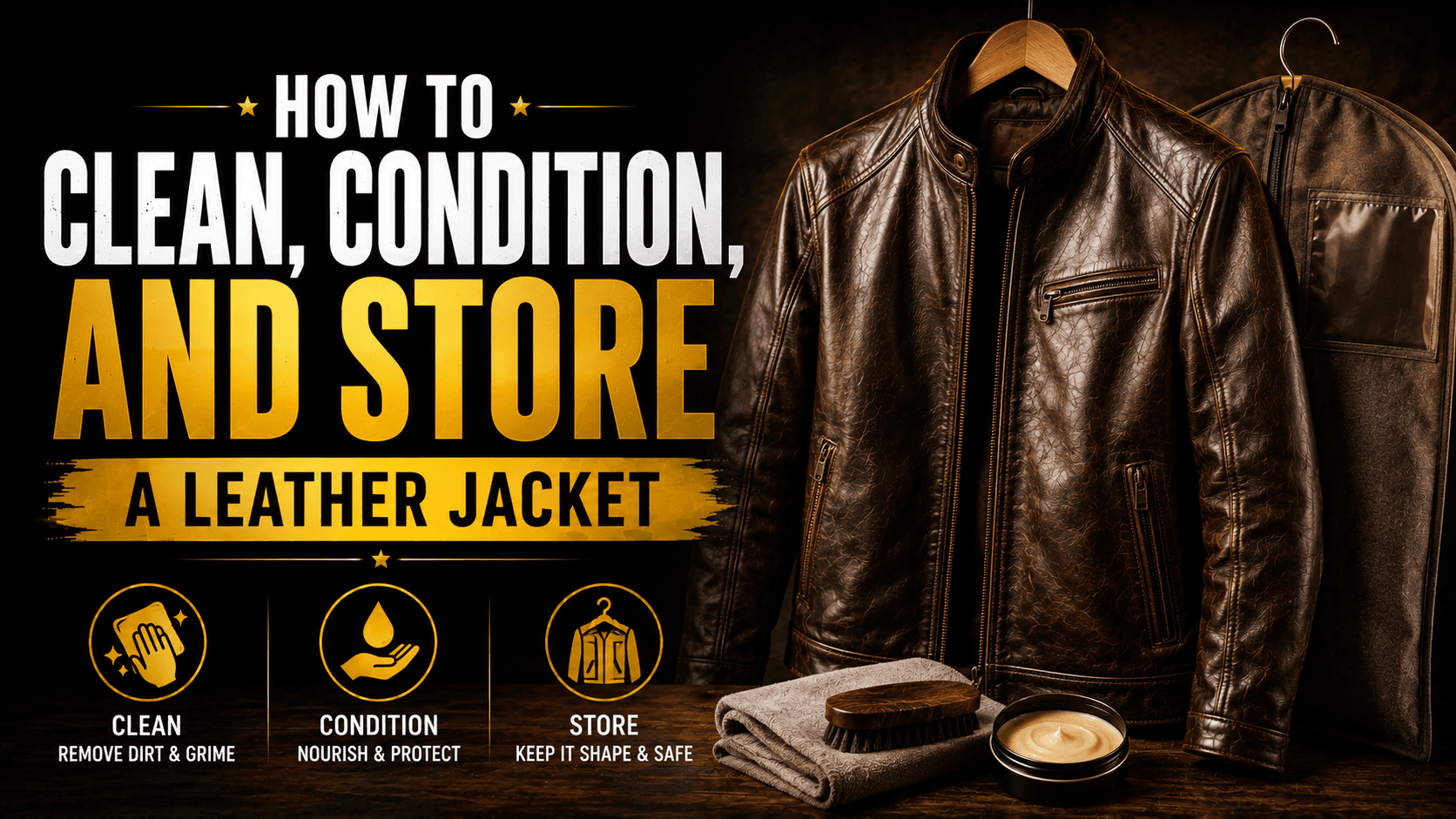
A good leather jacket can last for decades, but only if it is cleaned, conditioned, and stored the right way between wears. Most of the damage that ages a jacket early, dry stiff cuffs, faded shoulders, cracked collar edges, is not from a single bad day. It builds up slowly from dirt, missed conditioning, harsh storage, and high-friction areas that fade faster than the rest of the jacket.
This guide covers a full jacket care routine: how to clean it safely, when and how to condition it, how to fix worn color on cuffs and collars, and how to store it during the off season so it stays soft and ready to wear instead of stiff and faded when you pull it out again.
Clean a leather jacket with a leather-safe cleaner, not household detergent, dry cleaning chemicals, or baby wipes.
Cuffs, collars, and shoulder seams wear and fade fastest because of constant friction and light exposure.
Condition sparingly. Over-conditioning can soften the structure and attract dust more than it helps.
Store jackets on a wide hanger in a breathable space, never folded in a sealed plastic bag for long periods.
Restoration Flow
Clean the surface
Condition lightly
Recolor worn spots
Store on a hanger
Visual Guide
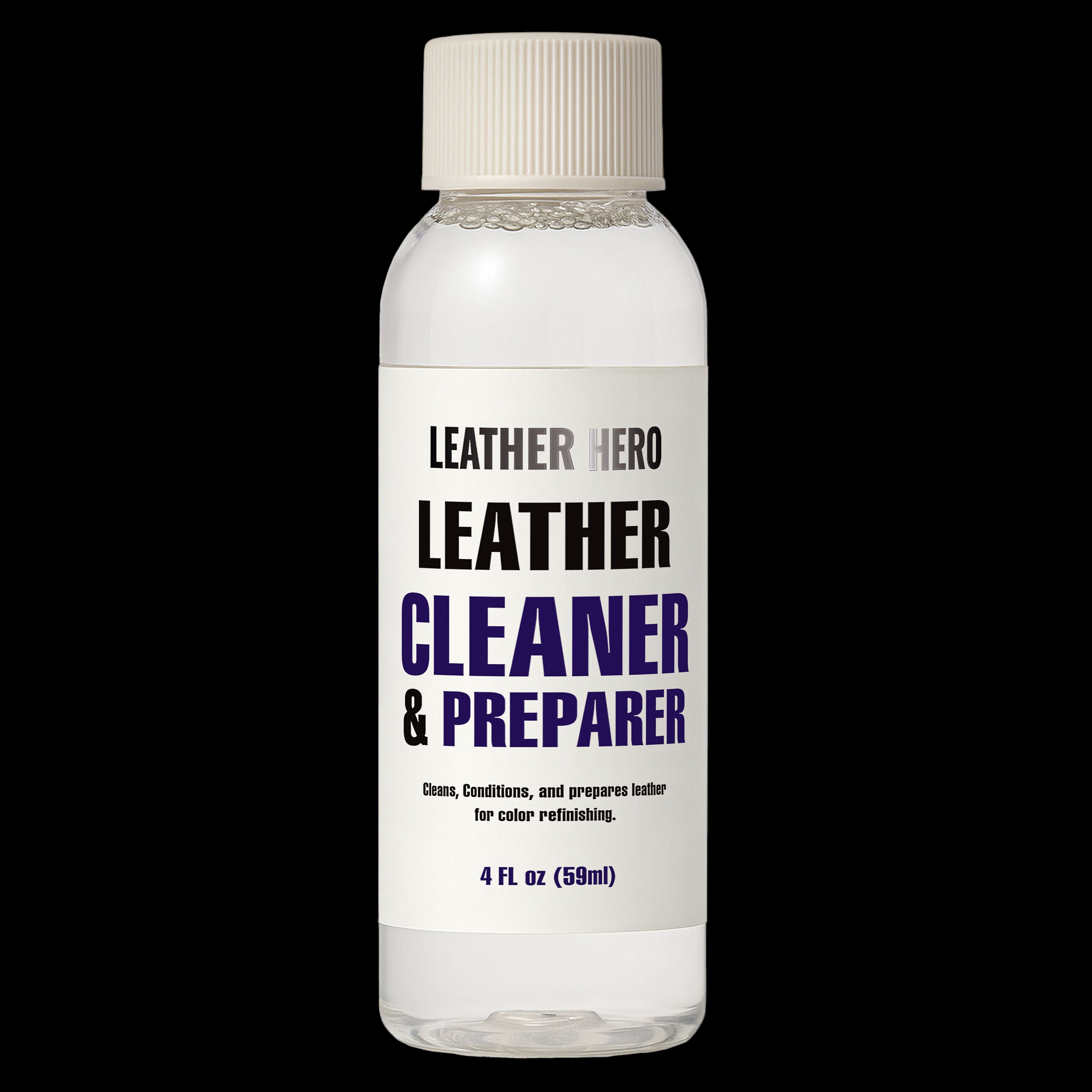
Clean Before Conditioning
Cleaning first removes body oil, dust, and grime that can block conditioner from absorbing evenly.
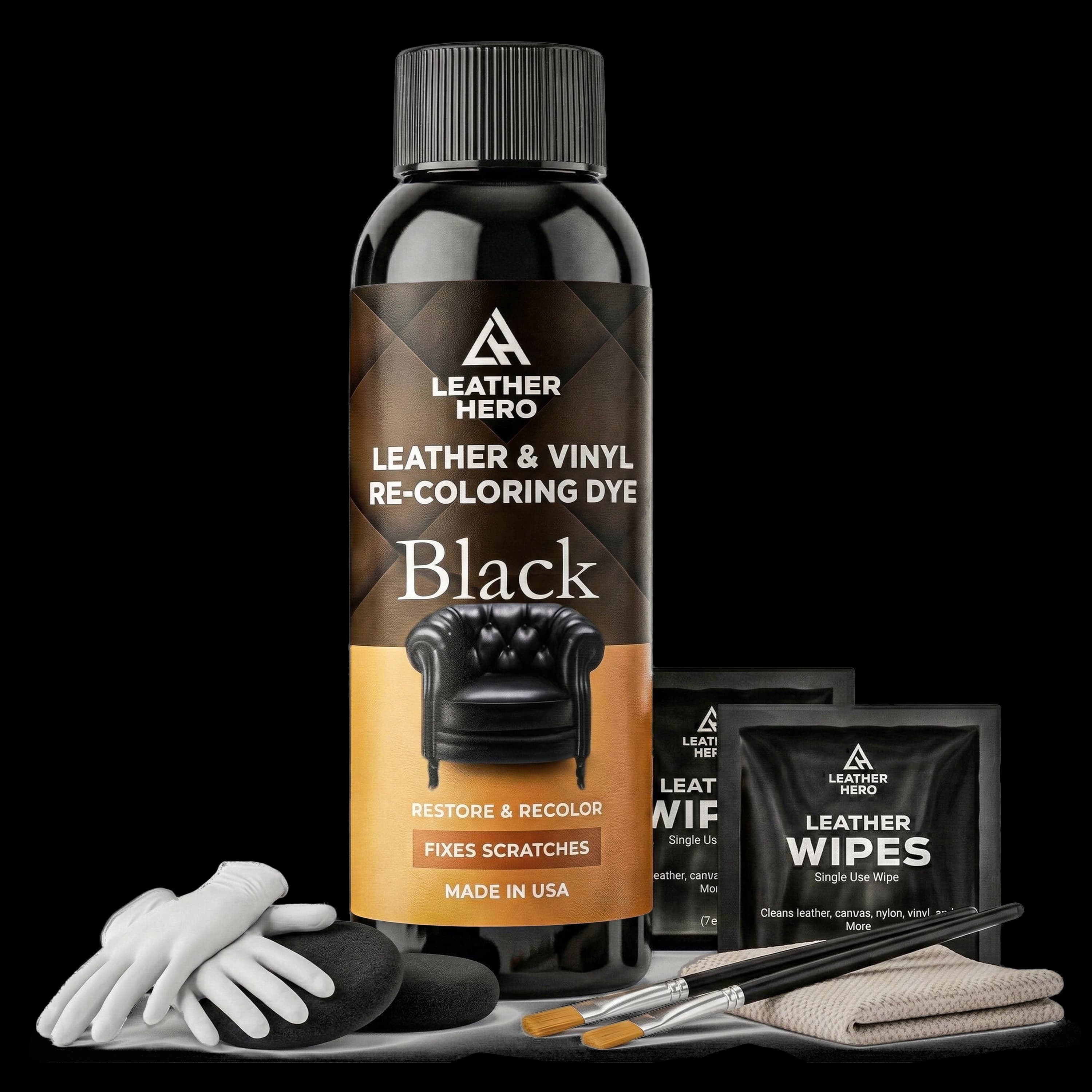
Recolor Worn Cuffs and Collars
Cuffs and collars fade first from friction, so they often need color restorer before the rest of the jacket.
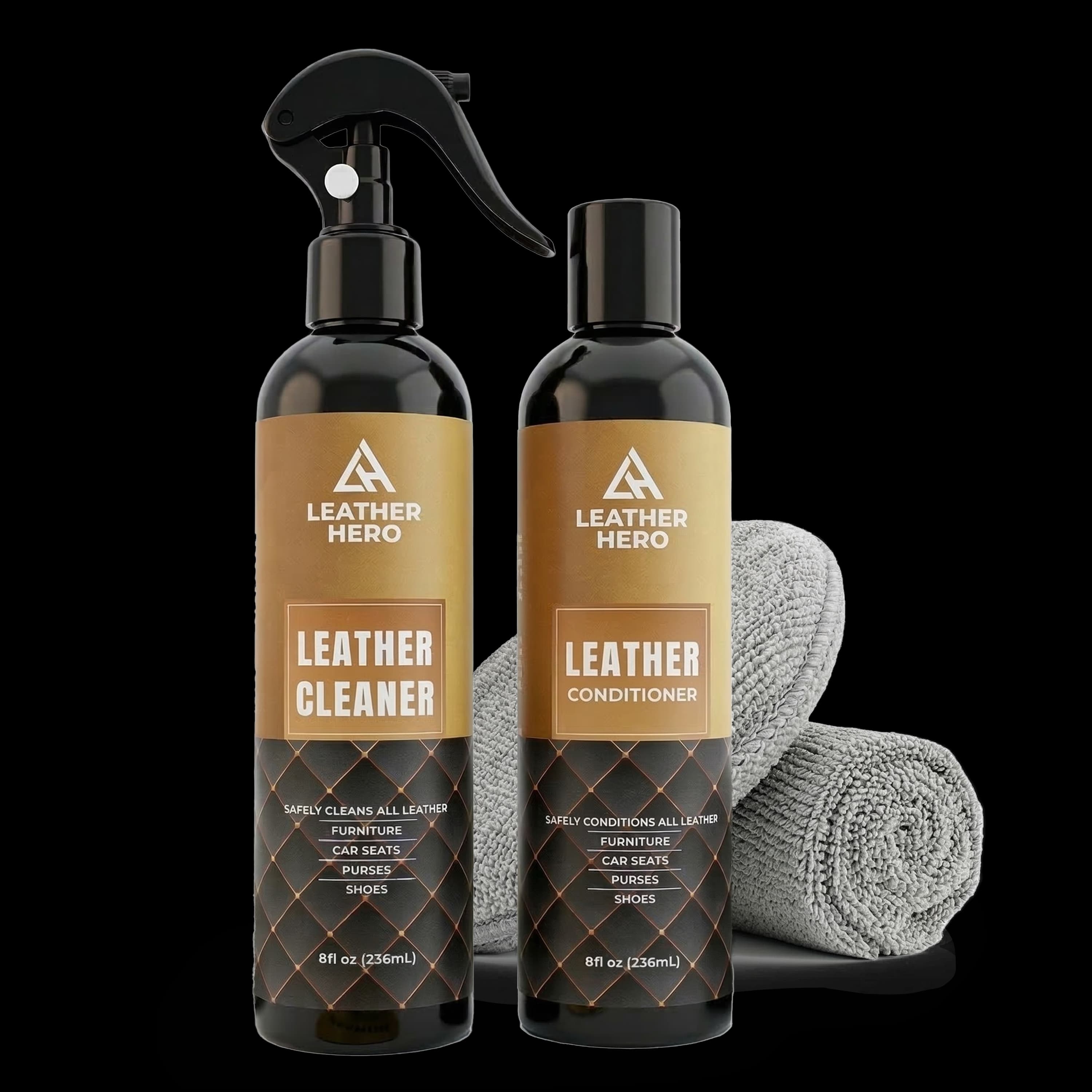
Full Routine for Seasonal Care
A complete cleaning and conditioning kit keeps a jacket flexible through wear and off-season storage.
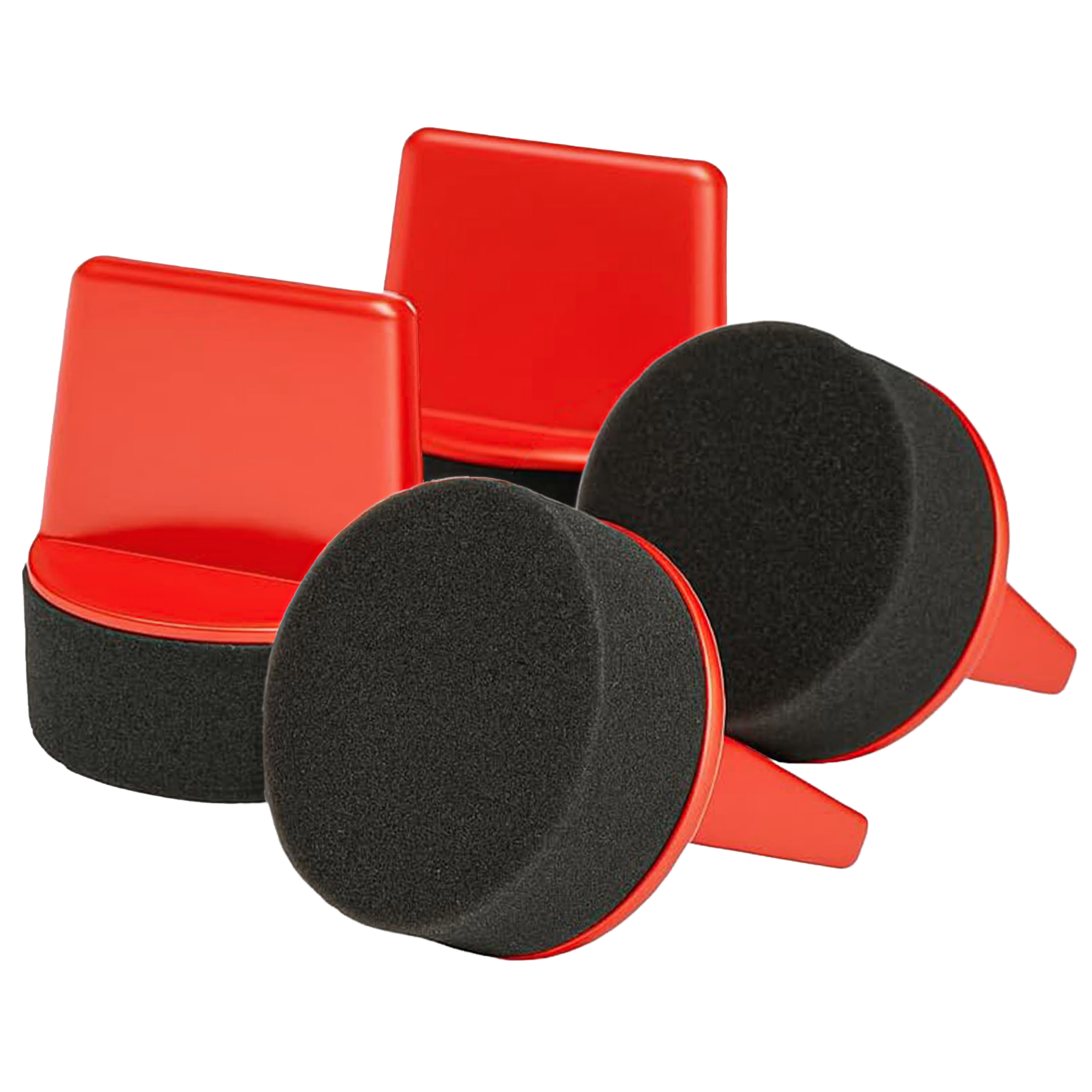
Control Color on Small Areas
Small daubers help feather color into seams, zippers, and cuffs without leaving hard edges.
Why Leather Jackets Wear Out Faster Than People Expect
A leather jacket takes more physical stress than most other leather goods. Cuffs rub against desks, steering wheels, and bag straps all day. Collars flex every time the jacket goes on and off. Shoulders and elbows crease constantly with movement. Add in sun exposure while walking or driving, and these high-friction areas age faster than the back panel or lining, which is why a jacket can look noticeably worn at the cuffs and collar while the rest still looks new.
Most jacket damage is gradual rather than sudden. Dry cuffs, faded shoulders, and a slightly stiff collar are early signs that cleaning and conditioning have fallen behind, not a sign the jacket is failing. Catching these signs early makes the fix much simpler than waiting until cracking sets in.
Step One: Clean the Jacket the Right Way
Wipe the jacket down with a soft, dry cloth first to remove loose dust and surface dirt. Then use a leather-safe cleaner on a cloth, not directly on the jacket, and work in sections, paying extra attention to cuffs, the collar, and underarm areas where body oil builds up fastest. Avoid soaking the leather, and never put a leather jacket through a washing machine, dry cleaner solvent process, or dryer unless it is explicitly labeled safe for that method.
Let the jacket air dry away from direct heat sources like radiators, heaters, or direct sun, since forced heat can dry leather unevenly and cause stiffness or cracking. A slower, natural drying process protects the leather's structure far better than trying to speed it up.
Step Two: Condition Without Overdoing It
Conditioning replaces some of the natural oils that cleaning and daily wear remove, helping the jacket stay flexible instead of turning stiff and brittle. Apply conditioner sparingly, focusing on areas that see the most friction and flexing, such as elbows, cuffs, and the collar fold. Let it absorb fully before wearing the jacket again.
Resist the urge to over-condition. Too much product can soften the leather's structure, leave a greasy feel, attract dust faster, and change the sheen of the finish. A light, occasional conditioning routine works better than heavy applications done infrequently.
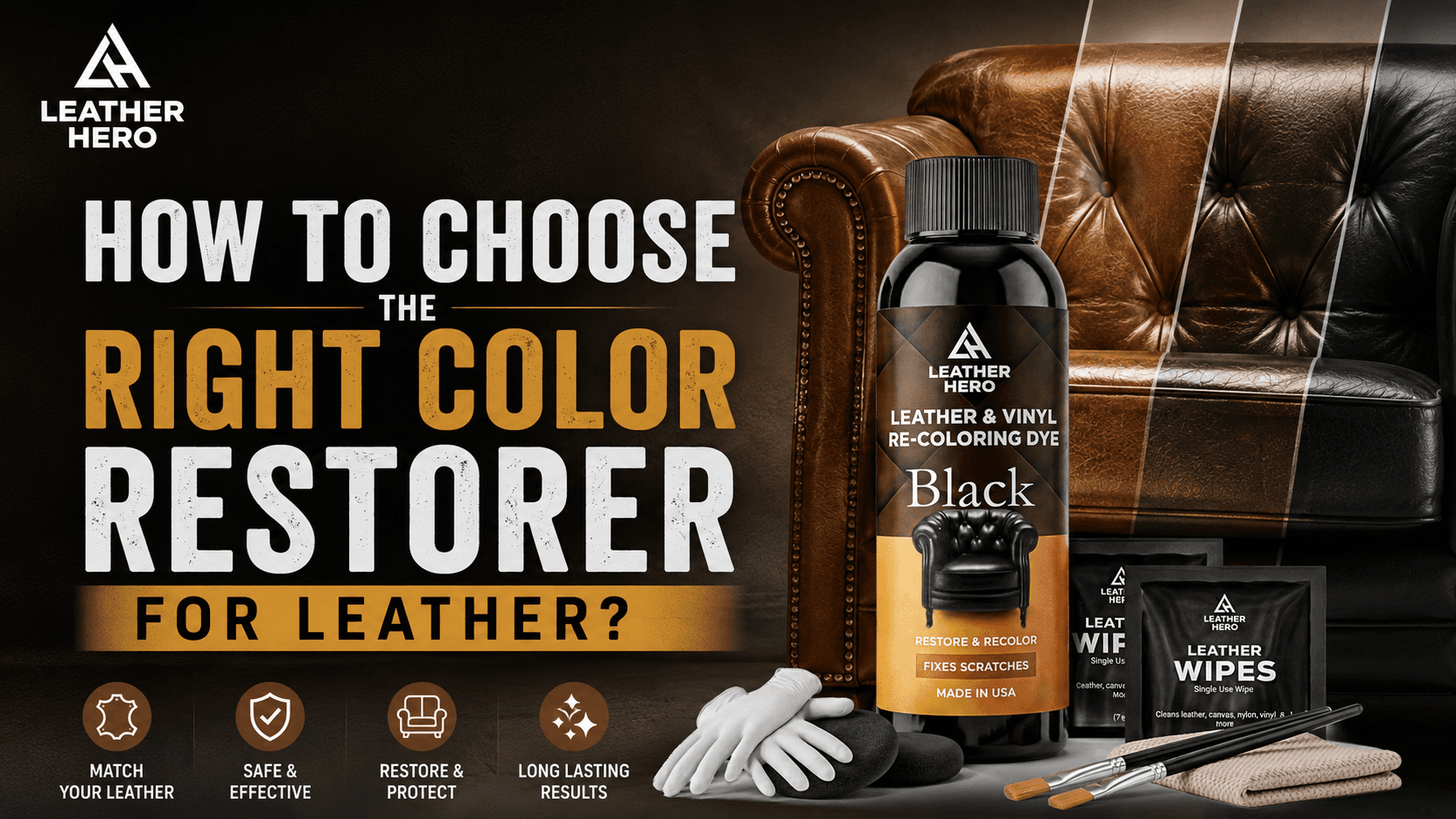
Step Three: Recolor Worn Cuffs, Collars, and Seams
Because cuffs and collars fade first, they often need attention before the rest of the jacket shows any wear. Test a color restorer in a hidden area, such as the inside of a cuff or a lower back panel, before working on visible areas. Let the test dry fully, since wet color usually looks darker than the final, dried result.
Apply thin coats with a small applicator, feathering the color past the worn edge into the surrounding leather so there is no visible line. Work slowly around seams, zippers, and stitching, since these areas are easy to over-apply color into if you move too quickly. Multiple thin coats almost always look better than one heavy coat.
Handling Rain, Snow, and Everyday Weather
A little rain will not ruin most finished leather jackets, but they should not be worn or stored while still wet. If the jacket gets soaked, blot excess moisture with a soft towel, and let it air dry naturally, away from direct heat, on a wide hanger that keeps its shape. Never use a hair dryer or heater to speed up drying, since fast heat can cause stiffness, shrinkage, or cracking.
Once fully dry, check whether the leather feels stiffer than usual. If it does, a light conditioning pass can help restore flexibility. Repeated exposure to rain or snow without follow-up conditioning is one of the most common reasons jacket cuffs and shoulders develop premature stiffness and cracking.
How to Store a Leather Jacket Between Seasons
Store the jacket on a wide, sturdy hanger that supports the shoulders properly, rather than a wire hanger that can create shoulder bumps over time. Use a breathable cloth garment bag if you want dust protection, and avoid sealed plastic bags, which trap moisture and can lead to a musty smell or mildew over long storage periods.
Keep stored jackets in a space with stable temperature and moderate humidity, away from direct sunlight, heating vents, and damp basements. Check on stored jackets every couple of months, especially in humid climates, and give them a light airing out if the storage area itself tends to feel damp.
Conclusion
A leather jacket rewards a simple, consistent care routine far more than an occasional deep repair. Regular cleaning, light conditioning, timely color touch-ups on cuffs and collars, and proper storage between seasons are what actually keep a jacket soft, flexible, and good-looking for years.
If wear has already set in, it is rarely too late to bring a jacket back. Clean it, condition it, test and apply color restorer where friction has taken its toll, and store it properly going forward so the next round of wear does not start from a worn-out baseline.
Match the product to the leather type, finish, and condition, then test it on a hidden area before full application.
Leather Hero Care NoteRecommended Product
Leather Hero Cleaner & Preparer
A focused product pick for the restoration steps in this guide.
Helpful References
Leather Naturally Care Guide
Independent reference on cleaning products, natural drying, and testing leather before full application.
How to Restore Faded Leather Color at Home
A deeper walkthrough of testing, applying, and blending color restorer on worn leather.
Leather Restoration Products Guide
Compare cleaners, restorers, fillers, and finishes to build a full jacket care routine.
Shop Leather Cleaners & Color Restorers
Browse Leather Hero cleaning, conditioning, and color restoration products for jackets and outerwear.
Frequently Asked Questions
How often should I condition a leather jacket?
Most jackets only need conditioning every few months, or when the leather starts to feel dry. Over-conditioning can soften the structure and attract more dust than it helps.
Why do the cuffs and collar wear out before the rest of the jacket?
Cuffs and collars face constant friction from bags, steering wheels, and putting the jacket on and off, plus more sun exposure while walking or driving, so they fade and dry out faster than the back panel.
Can I machine wash or dry clean a leather jacket?
No, not unless the jacket is explicitly labeled safe for that process. Standard washing machines and dry cleaning solvents can strip finish, stiffen leather, or cause shrinkage.
Is it safe to wear a leather jacket in the rain?
Light rain is usually fine for finished leather, but a soaked jacket should be blotted dry and air dried naturally, then conditioned once fully dry if it feels stiff.
What is the best way to store a leather jacket for months at a time?
Use a wide hanger that supports the shoulders and a breathable garment bag, kept in a space with stable temperature and moderate humidity, away from sealed plastic and damp storage areas.
Join The List
Leather Care, Delivered.
Get expert guides and exclusive offers in your inbox.