
How to Fix Scratched Leather Shoes, Bags, and Couches Step by Step
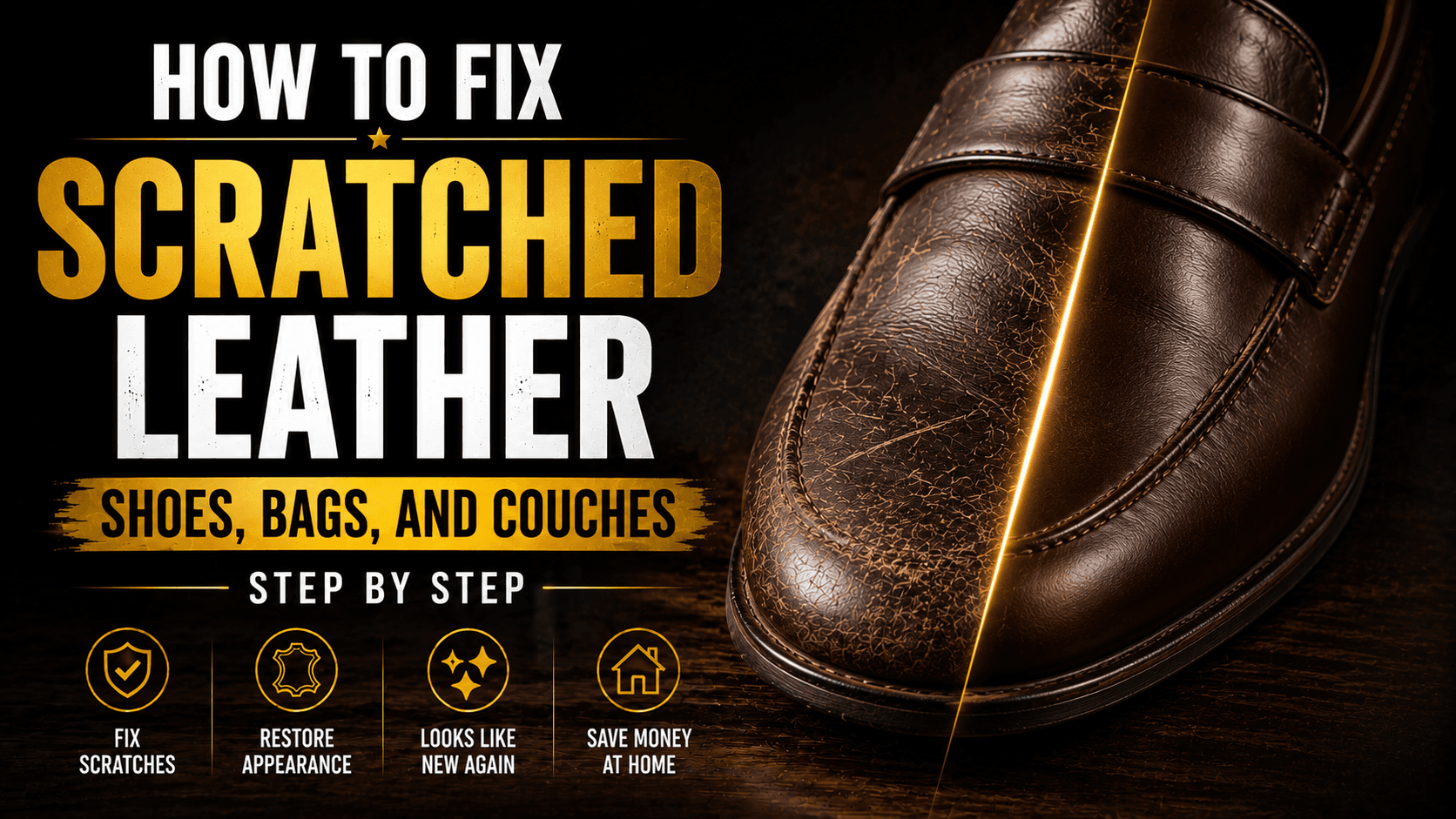
Scratched leather looks dramatic because light catches the damaged line immediately. A shoe toe can look ruined from one scrape. A couch arm can look old from a cluster of claw marks. A handbag corner can lose its polished edge after rubbing against a wall or car seat. The good news is that many scratches can be improved at home when you know whether the mark is only in the finish, has removed color, or has cut into the leather surface.
This guide walks through scratch repair for finished smooth leather shoes, bags, couches, jackets, steering wheels, and car interiors. It does not treat suede or nubuck as the same material, because napped leathers need brushing and specialized care rather than smooth-leather fillers and color products.
Light surface scratches may only need cleaning, gentle smoothing, and a small amount of matching color restorer.
Deep scratches that catch your fingernail usually need filler before color can look even.
Shoes, bags, and couches need different pressure levels because their leather thickness, finish, and flex patterns are different.
Finish protection is important after scratch repair on areas that rub against clothing, hands, floors, or other surfaces.
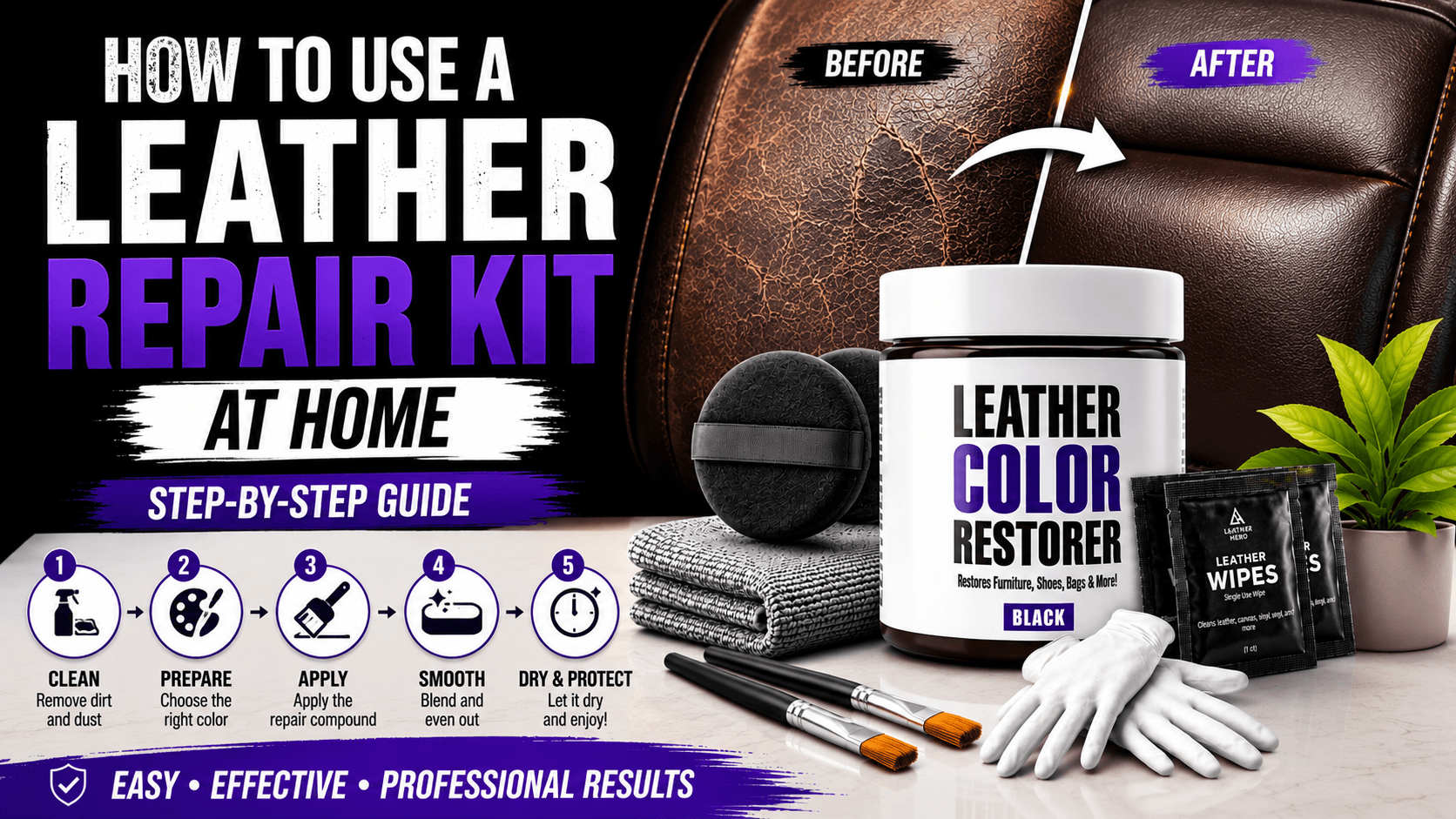
Restoration Flow
Clean the scratched area
Judge scratch depth
Fill only if needed
Restore color and seal
Visual Guide
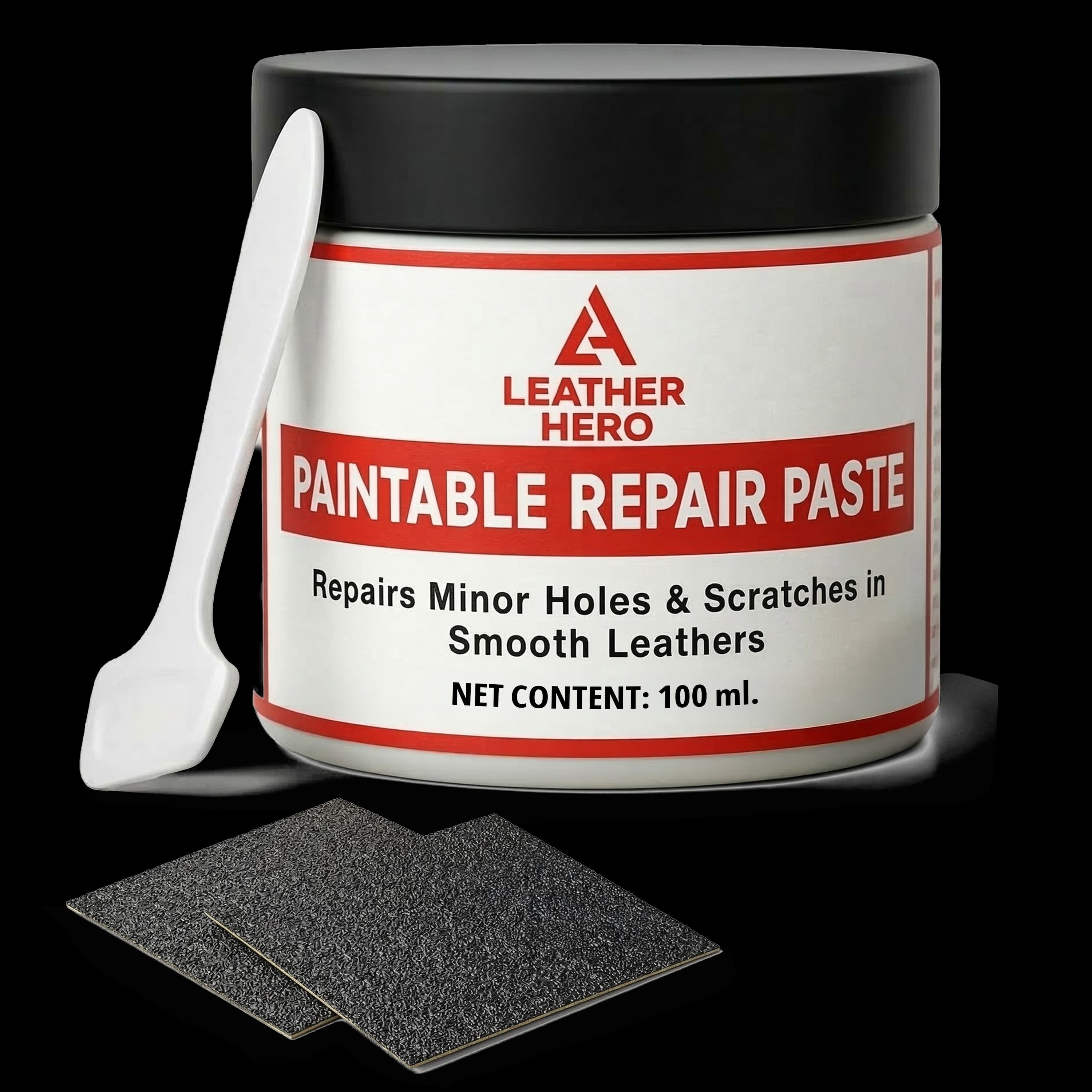
Repair Filler for Deep Scratches
Use filler when a scratch has removed material or leaves a rough groove that color alone cannot hide.
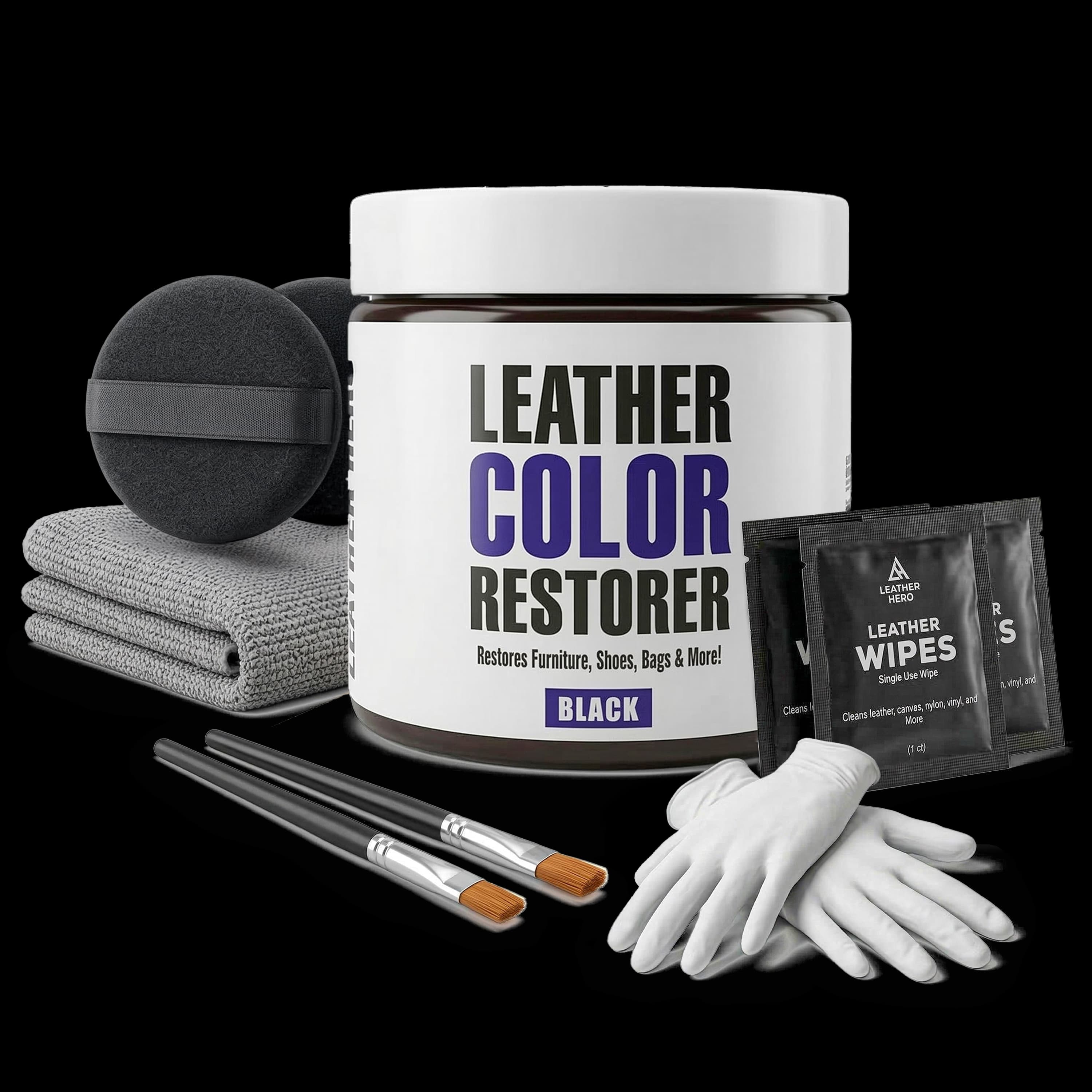
Color Restorer for Scuffed Scratches
Use matching color restorer when the scratch is mostly color loss on a smooth finished surface.
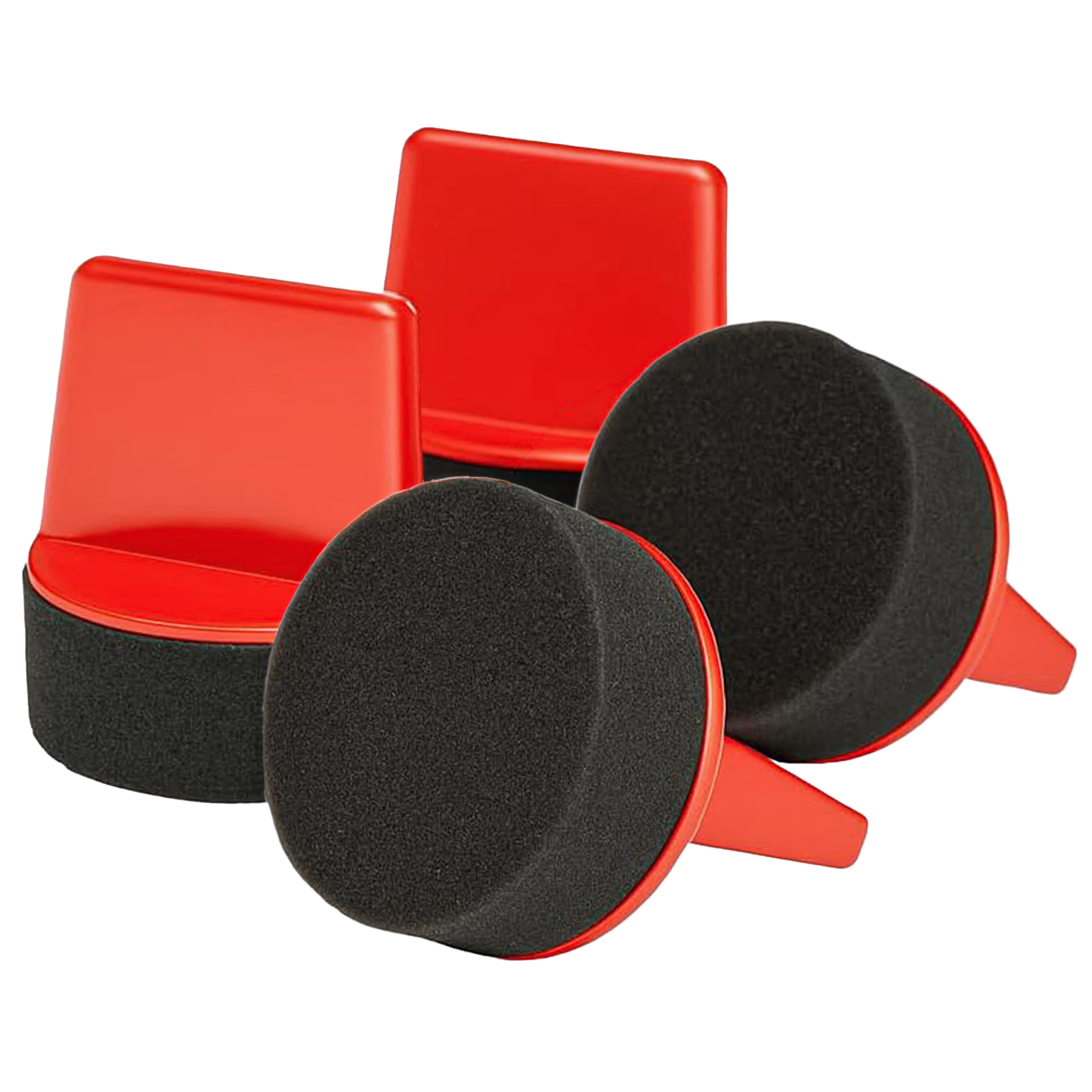
Foam Daubers for Small Repairs
Small applicators help keep repair products on the scratch instead of spreading a visible patch too far.
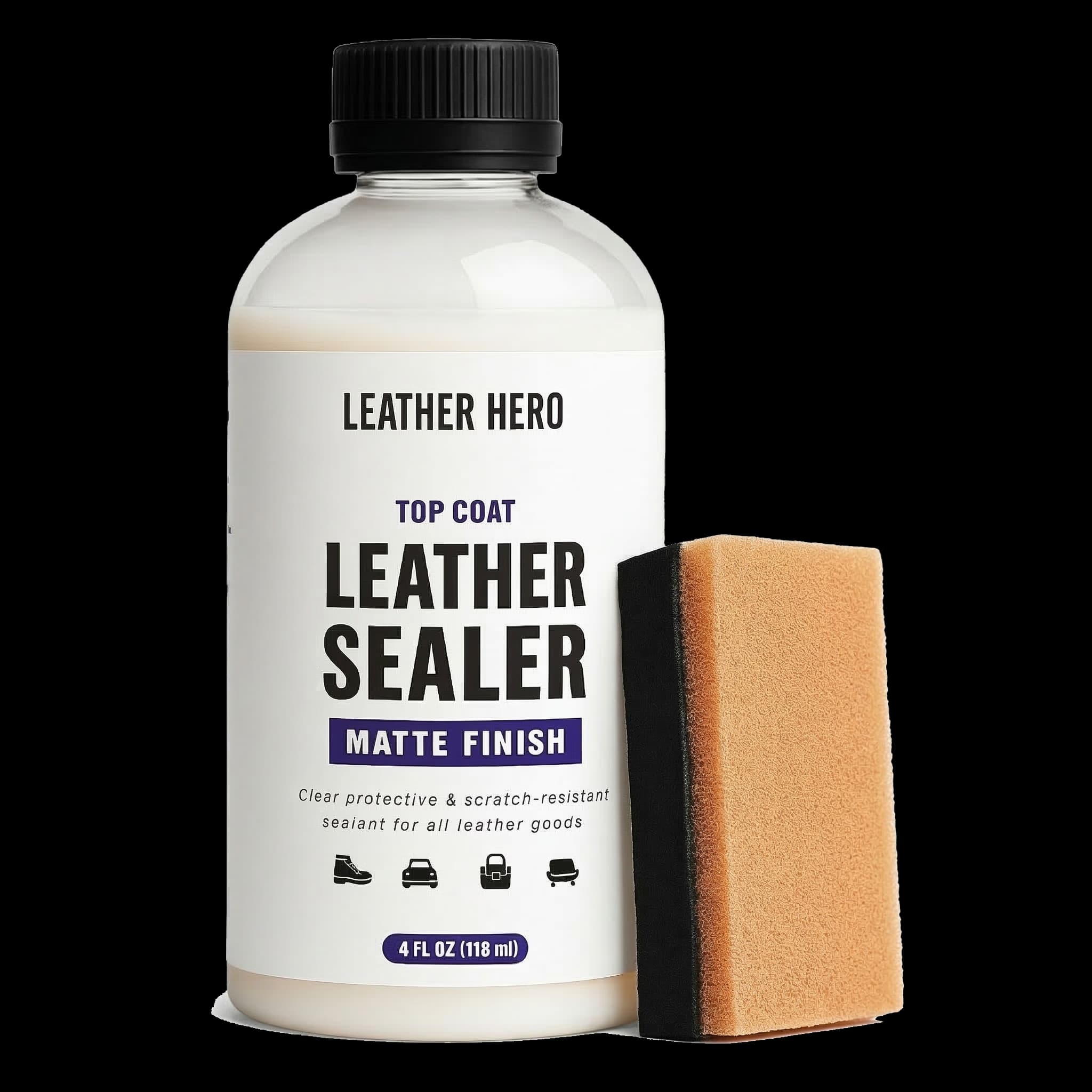
Top Coat for High-Wear Areas
A matte or satin sealer can help the repaired area blend into couches, car interiors, bags, and casual shoes.
First, Identify the Scratch Type
Not every scratch needs filler. A light surface scratch may only disturb the finish or color layer. It often looks pale but still feels smooth. A medium scratch may remove color and create a shallow line. A deep scratch catches your fingernail, exposes rough fibers, or creates a groove. The repair method depends on that depth.
Clean the area before judging it. Dust and oil can make a scratch look worse or hide how deep it is. Use a leather-safe cleaner and a soft cloth, then let the leather dry. After drying, run your finger gently across the mark. If the surface feels smooth, start with color and finish. If the surface feels rough, plan on filler first.
Tools and Products You May Need
For most smooth-leather scratch repairs, useful tools include a soft cloth, leather cleaner, small foam dauber, cotton swab, leather filler, matching color restorer, and top coat. You may not need every product. The goal is to use the least aggressive method that solves the scratch. Over-repairing a light scratch can make it more obvious than leaving a little natural wear.
Leather Hero Cleaner & Preparer is useful before repair. Leather Hero Leather Filler Paste Kit is for deeper scratches, cracks, and missing material. Leather Hero Color Restorer Kit is for pigment loss after the surface is smooth. Matte, satin, or gloss finish products help protect the repair and match the original sheen.
How to Fix Scratched Leather Shoes
Shoes scratch on toes, heels, sides, and flex points. Start by removing laces if they block the area, then wipe away dust. Clean the scratched section and let it dry. For a light scuff on black leather shoes, a small amount of black color restorer may be enough. Feather the color beyond the exact line so the repair does not look like a dot.
For deeper shoe scratches, use filler only where material is missing. Keep the repair thin because shoes flex with every step. Thick filler on a toe crease can crack or stand proud of the surface. After the filler dries and feels smooth, apply matching color in thin layers. Finish with satin or gloss depending on whether the shoe is casual or dressy.
How to Fix Scratched Leather Bags
Handbags and purses need a lighter hand because scratches often sit on corners, handles, strap edges, and smooth panels where over-application is easy to see. Clean first, then test color in an interior or hidden seam area. If the scratch is a pale scuff, apply a tiny amount of matching restorer with a small applicator and blend outward.
If the bag is designer, delicate, exotic, suede, nubuck, or aniline leather, slow down. Professional help may be safer for high-value items. For finished smooth leather bags, small scratches can often be improved with cleaning, color blending, and gentle finish protection. Avoid heavy oils on handles because they can darken leather and attract dirt.
How to Fix Scratched Leather Couches
Couches often have clusters of scratches from pets, keys, buttons, toys, and daily friction. Clean the whole affected panel, not only the scratch, because body oil and dust collect around arms and seats. If scratches are shallow and smooth, use color restorer to soften the pale lines. Work panel by panel so the color blends evenly.
Deep couch scratches may need filler. Apply thin layers and let each layer dry. Do not try to level a deep groove in one pass. Once the repaired area is smooth, use color restorer and feather beyond the repair. A matte or satin top coat is usually better for couches than high gloss because it looks more natural on large seating surfaces.
Car Seats and Steering Wheels
Automotive leather scratches often appear on bolsters, armrests, steering wheels, and door panels. These surfaces get frequent friction, heat, sunlight, and cleaning, so preparation and top coat matter. Clean thoroughly, repair texture if needed, restore color in thin coats, then protect with a finish that does not feel slick.
Steering wheels deserve extra caution because the repaired surface will be touched constantly. Avoid heavy buildup. Use thin layers and let everything cure before driving. If the wheel is severely peeling, gummy, or heavily cracked, replacement or professional refinishing may be safer than a home scratch repair.
Mistakes to Avoid
Do not sand aggressively unless a product direction calls for it. Do not use super glue, nail polish, markers, shoe polish, alcohol wipes, bleach, or household degreasers as leather repair shortcuts. These can create hard spots, stains, transfer, or finish damage that is harder to fix than the original scratch.
Do not apply color before filler dries. Do not seal over wet color. Do not use suede products on smooth leather or smooth-leather filler on suede. And do not expect color restorer to hide a groove. Color changes tone; filler changes texture. The best scratch repairs respect that difference.
Aftercare for Scratched Leather
After repair, treat the area gently while it settles. Avoid heavy cleaning, rubbing, or conditioning for the first stretch of use. For shoes, avoid wet weather immediately after repair. For bags, avoid rubbing the repaired area against denim or rough surfaces. For couches, keep pets and abrasive blankets away from the repaired panel when possible.
Long-term care is simple: clean lightly, protect from harsh sun, and handle small marks early. Minor touch-ups are much easier than repairing a cluster of old scratches that have collected oil, dust, and uneven wear.
Conclusion
Scratched leather can often be improved at home when you match the repair to the scratch depth. Clean first, decide whether the scratch is surface-level or deep, use filler only for missing material, restore color once the surface is smooth, and protect high-wear areas with the right finish.
Shoes, bags, couches, and car interiors all need slightly different pressure and finish choices, but the repair logic is the same. Do not rush to cover the mark. Build the repair in thin, controlled steps and the leather will look more natural, flexible, and cared for.
Match the product to the leather type, finish, and condition, then test it on a hidden area before full application.
Leather Hero Care NoteRecommended Product
Leather Hero Leather Filler Paste Kit
A focused product pick for the restoration steps in this guide.
Helpful References
Leather Naturally Care Guide
External reference for hidden-area testing and using leather-specific care products.
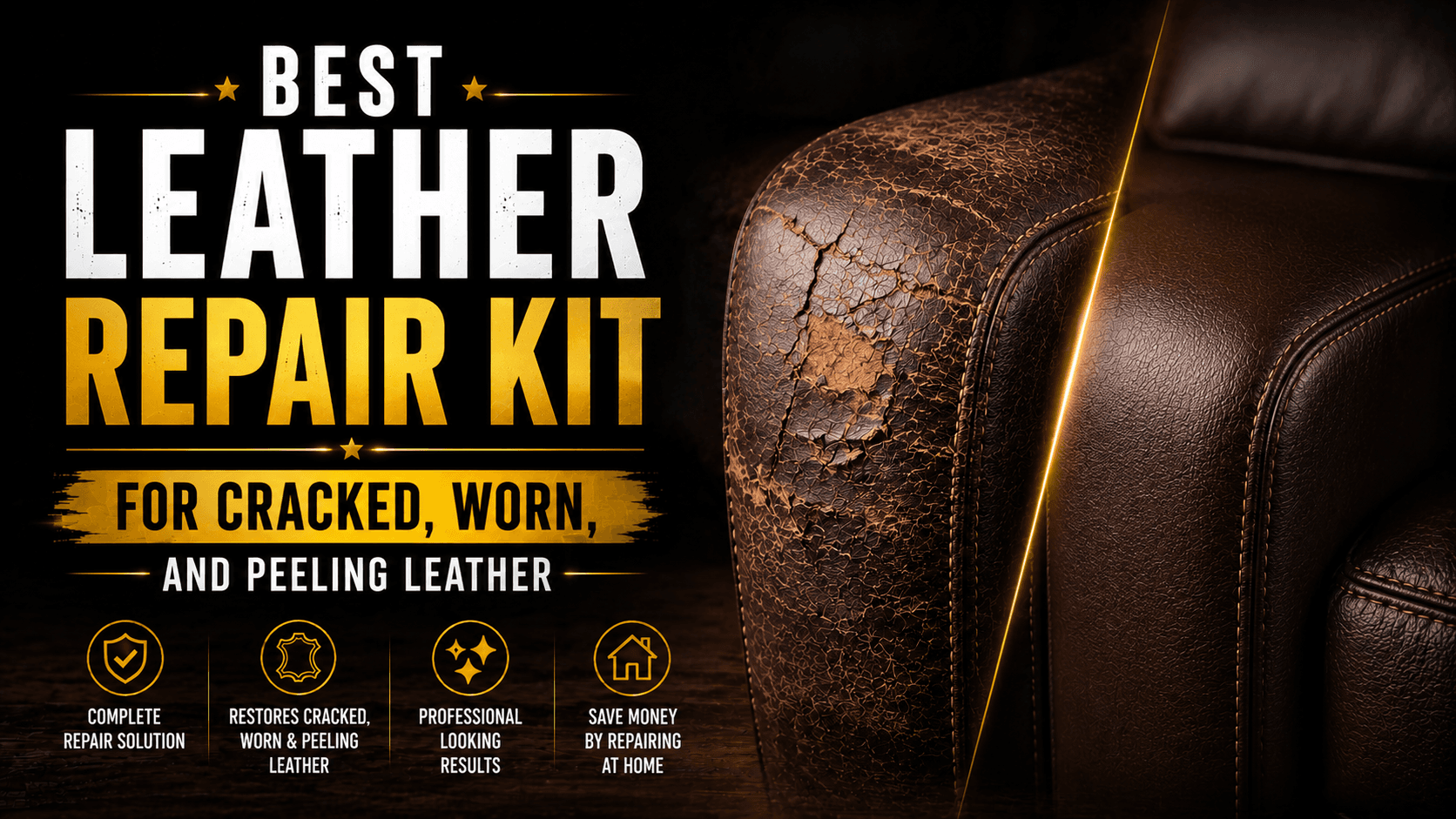
Best Leather Repair Kit Guide
Choose the right repair kit for cracks, scratches, peeling edges, and worn leather.
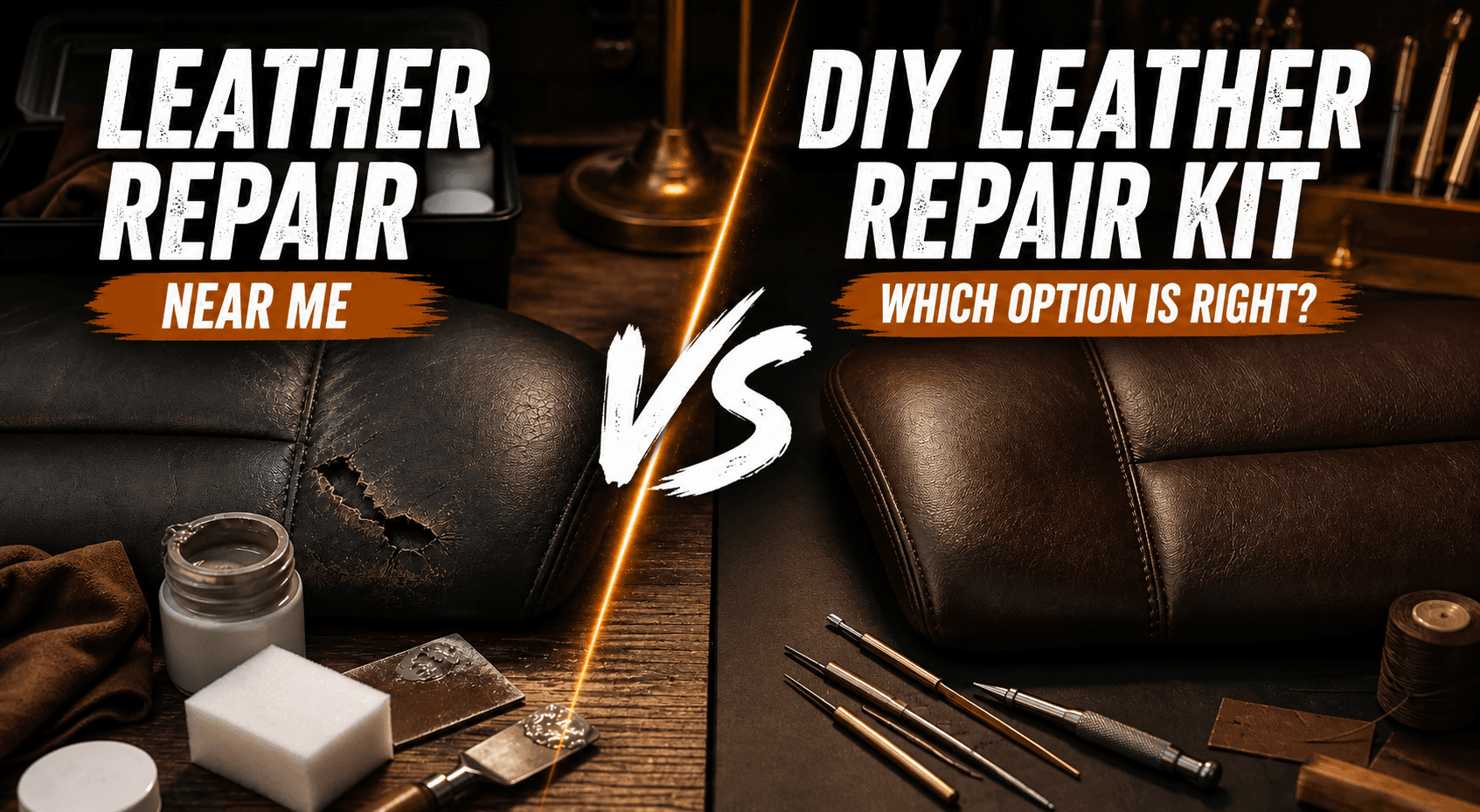
Leather Repair Products
Browse Leather Hero products for repair filler, color restoration, cleaning, and finishing.
Frequently Asked Questions
Can scratched leather be repaired at home?
Many scratches on finished smooth leather can be improved at home. Light scratches may need color restorer, while deeper scratches usually need filler first.
Can leather color restorer fix scratches?
It can improve light scratches and scuffs where the surface is smooth. If the scratch has a groove or catches your fingernail, use filler before color.
How do I fix scratches on a leather couch from pets?
Clean the panel, identify whether scratches are shallow or deep, fill rough grooves if needed, restore matching color, and protect with a matte or satin finish.
Can I use shoe polish on scratched leather bags?
Shoe polish can transfer, stain, or create uneven shine. A leather-safe cleaner, matching color restorer, and proper finish are safer for finished leather bags.
Should I repair suede scratches this way?
No. Suede and nubuck need brushing, suede erasers, and specialized suede products rather than smooth-leather filler and color restorer.
Join The List
Leather Care, Delivered.
Get expert guides and exclusive offers in your inbox.